

College of Engineering, Design, and Computing’s Graduating Seniors Show Out at The Senior Capstone Design Expo
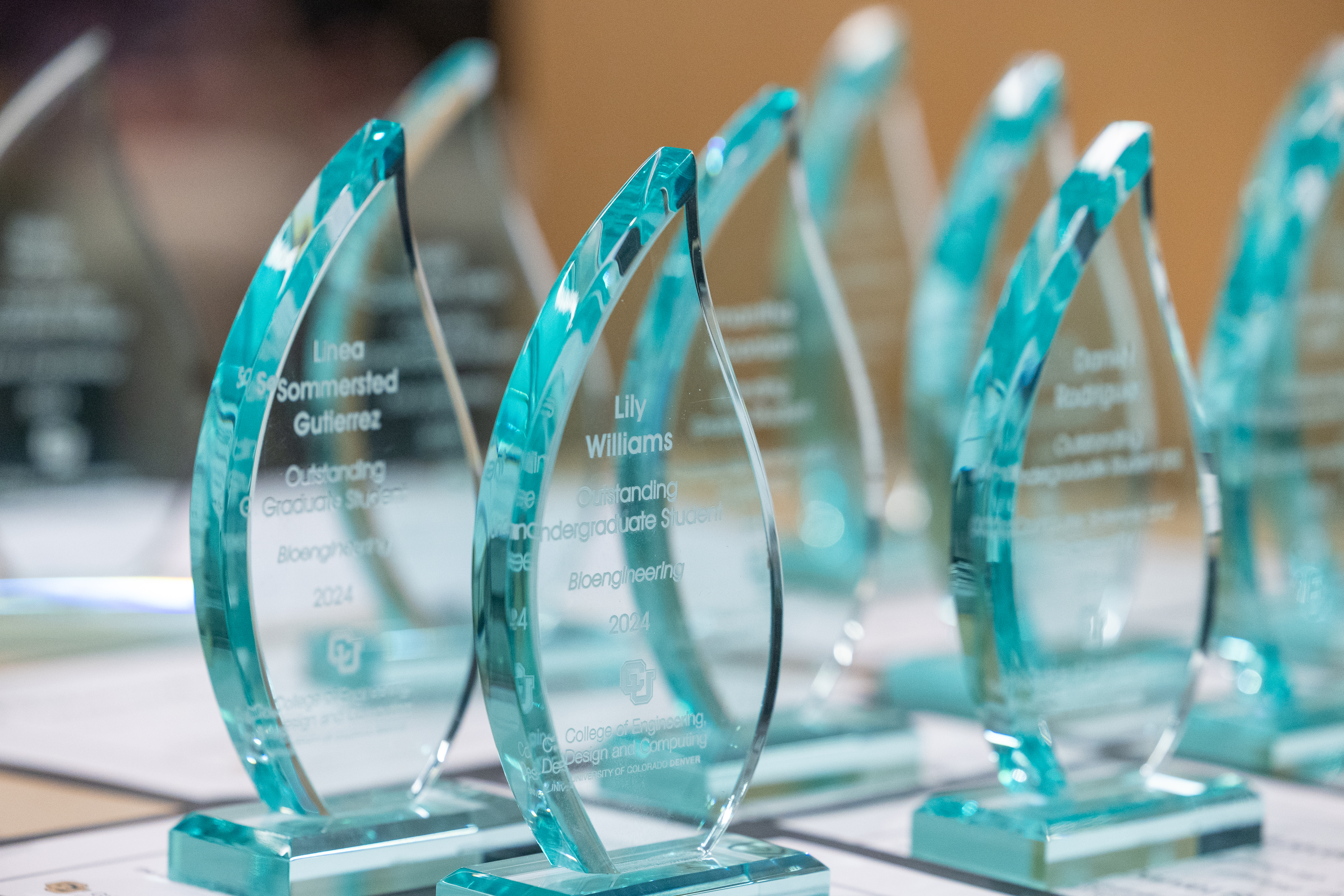
Capstone Design Expo. The Senior Capstone Design Expo is held every year right before graduation, where seniors present their capstone projects they have tirelessly been working on all year to a panel of judges, friends, family, and even some faculty members who helped them along the way.
What is a Capstone Project?
CU Denver engineering students in all five engineering departments (Civil, Mechanical, Electrical, Bioengineering, and Computer Science) take a Capstone Design course during their senior year. In this course, student teams design, build, and test a new product, process, or service. The teams consist of between 3 and 6 students and a faculty mentor. Teams implement a state-of-the-art Design Innovation (DI) process using an “Agile – Sprint” cadence. Projects have extensive engineering analysis and/or simulation, including prototypes to demonstrate feasibility.
Sponsors determine the focus of the design project and provide project funding. The CU Denver design team provides approximately a person- year’s worth of engineering design work. Sponsors retain the intellectual property.
The senior’s this year outdid themselves and showed off some impressive designs and projects. Here are the results as well as winning project descriptions below:
Overall Capstone Winner: Twistomy

Project Description: An ostomy is an external-facing, surgically diverted segment of a small or large bowel created by a surgeon that results in the formation of a temporary or permanent stoma. An ostomy pouch is a heavy-duty plastic bag that connects to an adhesive wafer that is applied and adhered to the skin around a stoma which collects waste periodically spilling from the stoma. Current pouching systems are obtrusive and malodorous and do not control the flow of gas or fecal matter from the ostomy into the pouch. 6 The continent ostomy device functions as a valve within an ostomy to provide an airtight and effluent-tight seal, allowing user control of the fecal stream and alleviating the need to wear an obtrusive ostomy pouch. The inner portion of the device is composed of an elastomeric ring and a thin plastic sleeve. The ring is deformed and inserted through the stoma into the lumen of the bowel and the outer portion of the thin plastic sleeve is folded over and secured by a series of concentric plastic rings that attach to the body via commercially available stoma wafers. Threads are used to twist the outer ring and close the stationary plastic sleeve within the stoma – like twisting a bread bag closed – thus creating a seal. Finally, an elastomeric cap containing a deodorized, absorbent material covers and conceals the device. To evacuate the bowel, the user detaches the elastomeric cap and attaches an ostomy pouch to the outer ring of the device. Holding the pouch and untwisting the inner plastic ring threads the pouch onto the device and untwists the thin plastic sleeve, thus opening the channel and allowing for the expulsion of gas and feces into a commercially available ostomy collection pouch.
Electrical Engineering Project Winner: VLF
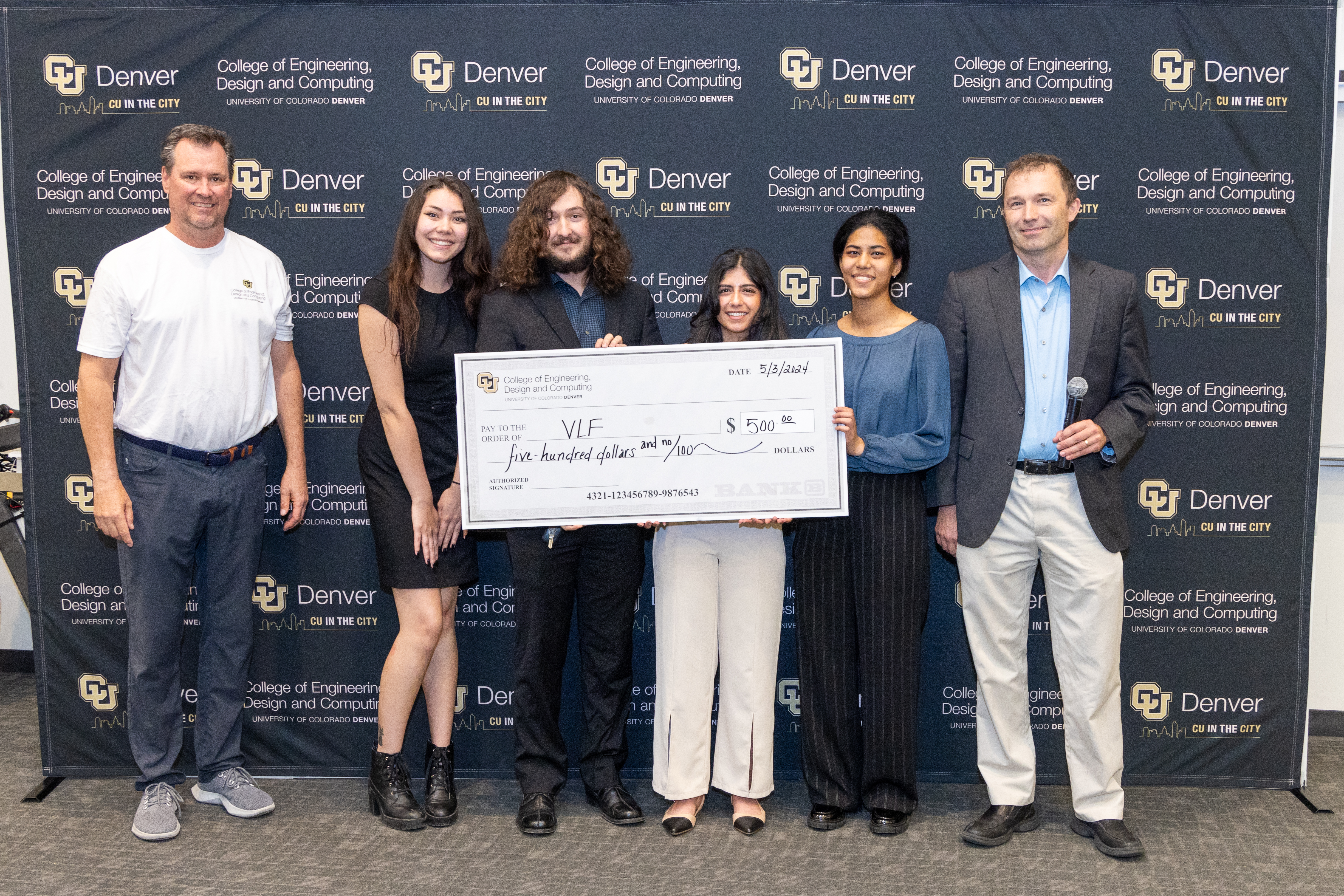
Project Description: Special scientific hardware is required to detect and record Very Low Frequency (VLF: 3- 30kHz) and Extremely Low Frequency (ELF: 300Hz-3kHz) waves. ELF/VLF waves can be generated by transmitting high frequency (HF) waves toward the ionosphere, which produces alternating currents that transmit ELF/VLF waves back toward earth; such procedures are done at facilities such as the High-frequency Active Auroral Research Program (HAARP) facility in Gakona, Alaska. Since the ELF/VLF band is not typically used in consumer applications, custom receivers are essential to make scientific grade recordings in the ELF/VLF bands. The electrical power grid is a major source of noise at ELF/VLF frequencies. Although the powergrid operates at 60 Hz, the harmonics of this frequency can have significance up to 10kHz. For this reason, it is often desired to make ELF/VLF recordings in remote areas away from power lines. For observations of ELF/VLF waves generated by the HAARP facility, the antenna and receiver should both be durable and self-sufficient; able to withstand Alaska weather at a distance from noise-producing civilization. An existing system in use at CU Denver requires upgrades to provide such durability and self-sufficiency. A remote power system and wireless communication system will be designed and provided to allow for the system to be as isolated from noise as possible. An improved antenna stand and protection for delicate electronics will also be provided to ensure no damage from environmental conditions.
Mechanical Engineering Project Winner: Snow Sentry
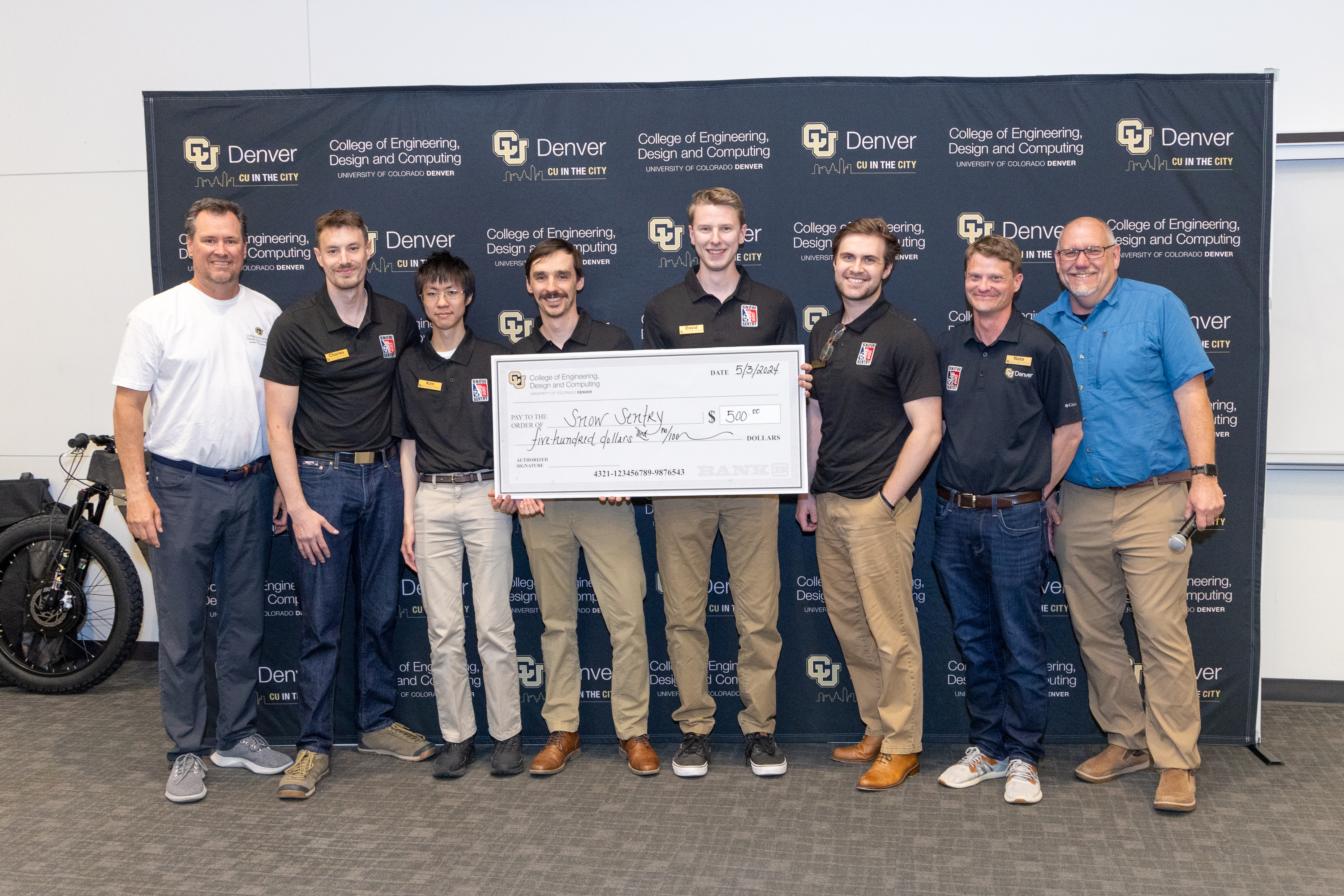
Project Description: The team designed and built a fully autonomous, battery-electric snowblower, designed to clear a typical suburban driveway in under 30 minutes. Challenges have been the frame, the augur, the drivetrain, traction and software for proper operation of the snowblower. Moving to create a path for testing our own generated path with software given a set of parameters, such as driveway dimensions, utilizing field mapping, have also been part of our effort.
Computer Science project Winner: Neuro Nudge

Project Description: An ADHD-focused scheduling & task prioritization tool designed for students who think differently. Our adaptive systems goes beyond typical planning tools – it intelligently molds to your academic semester, providing a truly personalized and autonomous time management experience that celebrates diversity in learning styles.
Bioengineering Project Winner: Pulse Pioneers
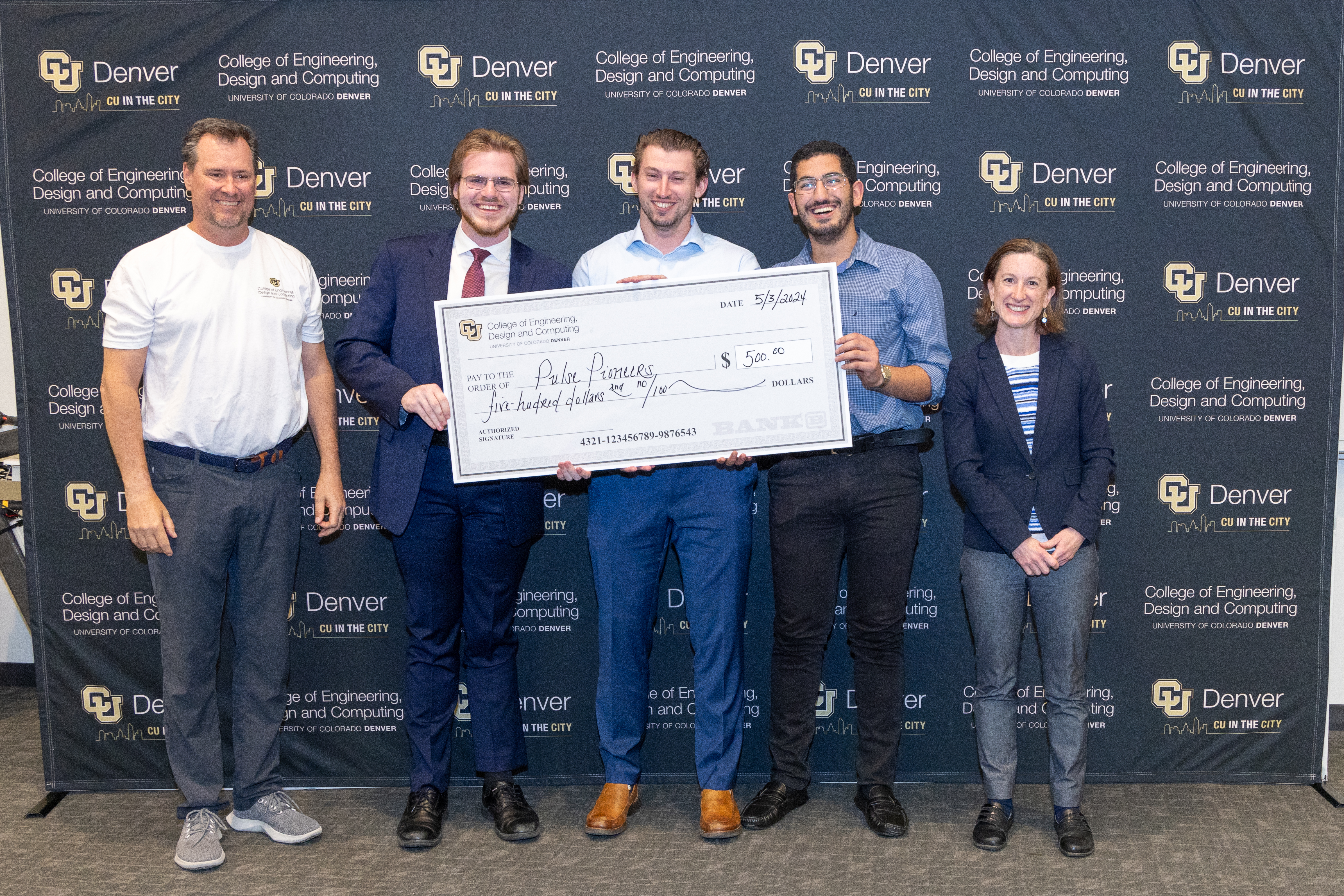
Project Description: The aim of this project was to create a button-activated, chest-strap based, one-lead electrocardiogram (ECG) device that can be worn long term without skin irritation. This device records the electrical signals in the heart of a patient when they are experiencing symptoms of arrhythmias in non-clinical settings. These arrhythmias are caused when electrical signals that coordinate the contraction of the heart do not behave properly, they can occur continuously, periodically, randomly, or be triggered by certain action/behavior, and can be visualized in ECG readings. Specifically, the ECG signal can be collected, filtered, and stored after a patient activates the device while they are symptomatic. This data can then be transferred to a provider to help them more accurately and holistically diagnose any heart arrhythmias the patient may possess. This design includes a chest strap made of biocompatible material that holds an ECG recording mechanism to a patient’s chest at the midline below the pectorals. The device contains electrodes to collect the ECG signal, a AD8232 (ECG sensor), a SparkFun ESP32 Thing Plus C (microcontroller), a microSD card for additional data storage, a lithium-ion rechargeable battery, a button for recording activation, and internal wiring to connect all components. The data storage/transfer circuit was programmed in C++ using the Arduino IDE to measure and record the ECG data at a rate of 250 Hz and transmit this data to a local server via Wi-Fi (TCP/IP). If Wi-Fi is unavailable the device will store the data locally on the microSD card. Verification testing of the device’s capabilities was performed to ensure the signal is collected, filtered, recorded, and transferred as intended. Validation testing was also performed to ensure the device met the needs of the client and patient.
Civil Engineering Project Winner: Walker Ditch

Project Description: This project will include the design of an irrigation ditch crossing to eliminate water from the Walker Ditch from co-mingling with water from Dry Creek. The design will include a demolition plan for the existing Dry Creek diversion structure, which functions more as a dam structure and is considerably beyond its life expectancy. Some issues with the current structure are the constant undermining of the creek along the flanks of the concrete structure, failing concrete, and operators having to enter the water to manually build/remove the wood part of the diversion structure. 1 4 The State of Colorado has also notified the Walker Ditch of noncompliance with water rights because of the co- mingling of the two water sources. The upper watershed of Dry Creek contains alkaline soils, which diminish the water quality downstream in the Walker Ditch. The water quality is important to the Town because the walker ditch is used for the watering of a 22-acre park and the source of water for a local fishing pond. An option is to realign the walker ditch and build the crossing in a new location if it allows for better elevations for the crossing. Upstream of the diversion, there is also a section of the Walker Ditch that leaks into the fairgrounds and the Town would like a solution to remedy that issue. The town surveyor has finished his fieldwork, which we must be incorporated into the final solution. Dry Creek is a Secondary Water of the U.S.
Construction Management Project Winner: ASC Mixed Use

S
Project Description: ASC takes place in Reno, Nevada and is described as a “Professional association for the development and advancement of construction education, where the sharing of ideas and knowledge inspires, guides and promotes excellence in curricula, teaching, research and service”. They hold an annual competition for students from various schools around the world. This event is a 4-day experience. The main purpose of this competition is for students to handle a real-life construction problem, prepare a formal Request For Proposal, and present it to the sponsor of their competition. This competition is broken down between Region 6 & 7 schools, then within those regions, there are different sectors. This project documents the team’s efforts acting as Layton Construction responding to a request for a building proposal.
Categories
Bioengineering, Civil Engineering & Construction, Computer Science, Construction Program, Electrical Engineering, Events, Mechanical Engineering, News, Research Opportunities, STEM, Students, Undergraduates, Women in Engineering
Discover more from College of Engineering, Design and Computing News
Subscribe to get the latest posts sent to your email.

CU Denver Engineering, Design and Computing View All
At the CU Denver College of Engineering, Design and Computing, we focus on providing our students with a comprehensive engineering education at the undergraduate, graduate and professional level. Faculty conduct research that spans our five disciplines of civil, electrical and mechanical engineering, bioengineering, and computer science and engineering. The college collaborates with industry from around the state; our laboratories and research opportunities give students the hands-on experience they need to excel in the professional world.
 College of Engineering, Design and Computing News
One thought on “College of Engineering, Design, and Computing’s Graduating Seniors Show Out at The Senior Capstone Design Expo” Leave a comment ›