

CEDC Alum Works to Keep America’s Rivers Clean
Understanding history is important across multiple disciplines. As a case in point, consider this example of water quality. Suspended sediment – the dust-sized particles that make the waters of lakes and rivers cloudy – can have severe implications on water quality. The amount of sediment can impact everything that depends on waters for survival from salmon who need clean rivers to spawn to people who need clean water to drink and irrigate crops.
CEDC alum Kevin Humphreys and civil engineering Associate Professor David Mays have recently published “Evaluating Trends and Insights from Historical Suspended Sediment and Land Management Data in the South Fork Clearwater River Basin, Idaho County, Idaho, USA ,” in the journal Hydrology.
The study was the culmination of Humphreys’s master’s degree work at CU Denver. The study presents a clever analysis of sediment data and disturbance data through modeling to identify trends and linkages. Although limitations in the available data prevented a complete analysis, the work identified specific recommendations for future data collection.
“This study was important, well done, and well presented,” said Mays who served as Humphreys’s advisor for his master’s degree. Humphreys graduated in 2020 with a Bachelor of Science degree in civil engineering while participating in Environmental Stewardship of Indigenous Lands (ESIL). He earned a master’s degree in civil engineering in 2023. Mays continues, “I am especially impressed with the fluency with which Kevin integrated different perspectives into this work, which is one of the cornerstones of the ESIL program.”
Humphreys is one of the many examples of CEDC graduates who are making a difference in our lives every day. Humphreys works as a Hydrologic Engineer with the United States Bureau of Reclamation (USBR), a federal water agency that manages water and power resources in the American West. At USBR as part of his work on the Colorado River Research and Modeling team, he develops computer models that simulate operations of the Colorado River System under many possible hydrologic futures.
Recently, Humphreys’s group has focused on applying their modeling along with emerging decision science, Decision Making under Deep Uncertainty (DMDU), to support negotiations over how the Colorado River system, which supports 40 million people across 2 countries, 7 states, and 30 basin tribes, will be operated once current guidance expires at the end of 2026. He is a registered professional engineer (PE) in Colorado.
Mays is an Associate Professor in the Department of Civil Engineering at the University of Colorado Denver. He earned his B.S. from the University of Pennsylvania in 1995, then taught high school through Teach for America and worked as a contractor at Los Alamos National Laboratory before earning his M.S. and Ph.D. from the University of California Berkeley in 1999 and 2005, respectively. He has been at CU Denver since 2005, where he teaches fluid mechanics and hydrology, studies flow in porous media using ideas from complex systems science, leads the graduate track in Hydrologic, Environmental, and Sustainability Engineering (HESE), and advocates for broadening participation in engineering. He is a registered professional engineer (PE) in California and Colorado.
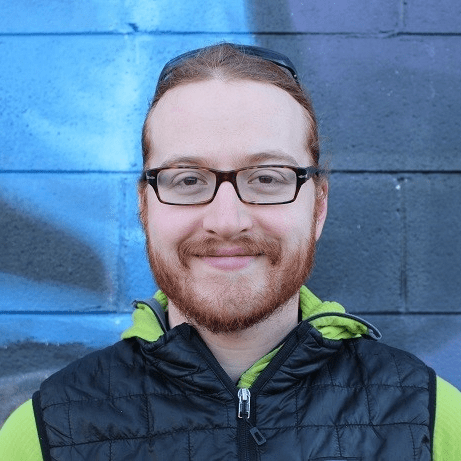
Kevin Humphreys

David Mays
Categories
Discover more from College of Engineering, Design and Computing News
Subscribe to get the latest posts sent to your email.

CU Denver Engineering, Design and Computing View All
At the CU Denver College of Engineering, Design and Computing, we focus on providing our students with a comprehensive engineering education at the undergraduate, graduate and professional level. Faculty conduct research that spans our five disciplines of civil, electrical and mechanical engineering, bioengineering, and computer science and engineering. The college collaborates with industry from around the state; our laboratories and research opportunities give students the hands-on experience they need to excel in the professional world.
 College of Engineering, Design and Computing News