

Alum Credits CEDC with Transforming His Life
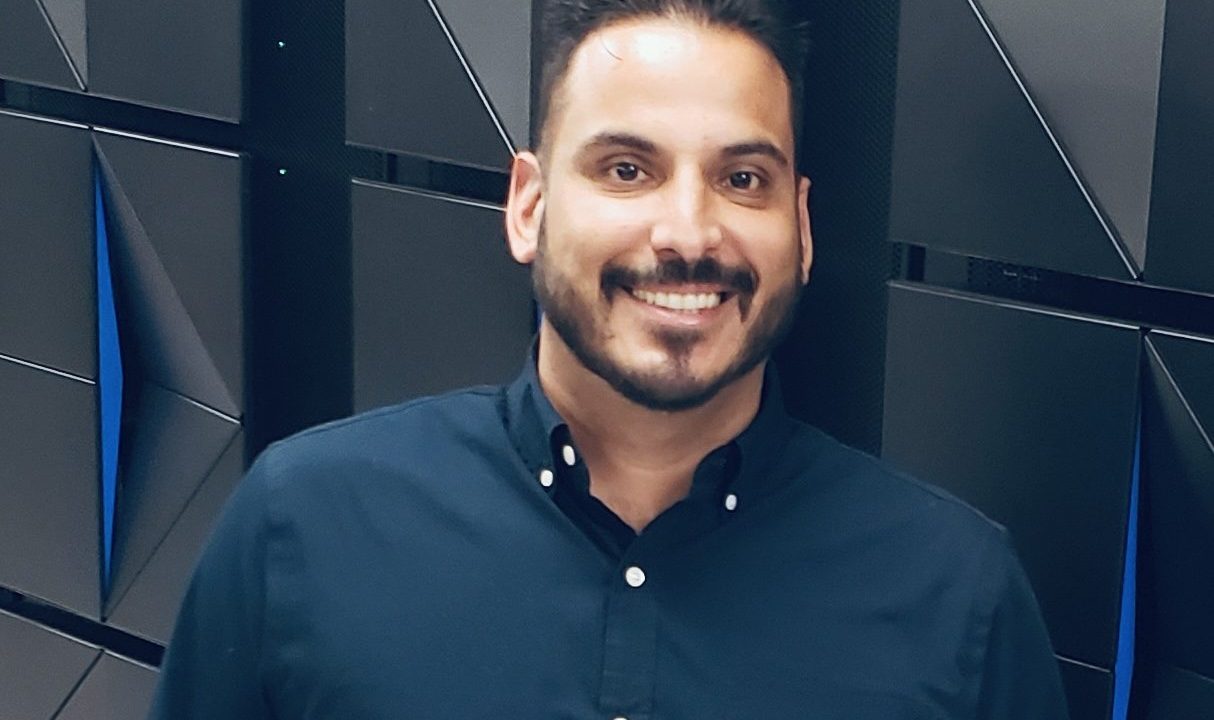
When Egduard Jauregui decided to go back to school, he knew he wanted a flexible program that would prepare him for a career that would pay well. He wanted excellent book learning along with plenty of practical experience.
That’s why he chose CU Denver. Living in Aurora and running his own small construction business, he didn’t have a lot of time to waste. He needed flexibility to take classes two days a week and a place that would provide hands-on experiences that could showcase what he learned in the classroom when he was ready to hit the job market.
“The great thing about CU Denver is they are willing to meet you where you are and help get you where you want to go,” said the father of four. “I went back to school for a second degree, and it wasn’t easy. I was running my own business from my phone while going to school full time. There were a lot of personal sacrifices my wife and I made. It was hard. But it was worth it.”

Jauregui met with an advisor before he committed to CU Denver who helped him chart his path. He enrolled in 2019 and earned his Bachelor of Science degree in electrical engineering in 2022 and then completed a master’s degree in electrical engineering in 2023.
“I wanted to get my degrees before I hit 40,” he said.
While at in the College of Engineering, Design and Computing he took a class with Professor of Electrical Engineering and Department Chair Mark Golkowski. Soon after he was working in his lab, which would prove life changing.
Golkowski’s research focuses on electromagnetics and plasma physics in nature and the laboratory. He has done extensive experimental work with the HAARP facility in Gakona Alaska involving probing the ionosphere and magnetosphere and he is exploring the use of plasma discharges for disinfection and decontamination in the medical field.
Jauregui contributed to multiple research projects in the lab working closely with graduate students and faculty mentors. He wrote MATLAB software to analyze and catalog legacy electromagnetic data that was digitized from magnetic tape. In this task he wrote signal processing code to identify and decode Morse Code time stamps that were recorded as analog signals. This effort allowed CU Denver to archive valuable experimental data and make it useful for researchers worldwide. The data is now part of an archive managed by Georgia Institute of Technology. Jauregui also supported electromagnetic scattering experimenting. He built an experimental setup involving a reverberation chamber and vector network analyzer, creating an automated python script to interface with the various test equipment.
“Eddy accomplished tasks ranging from the mundane programing of a stepper motor to advanced calibration of a sensitive electromagnetic measurement,” said CEDC Dean Martin Dunn. “In his spare time, he also helped revitalize the Society of Hispanic Professional Engineers (SHPE) Chapter at CU Denver.”
He was also a co-author on two academic journal publications before he graduated thanks to the work in the lab. A third academic journal was published after graduating from his Senior capstone project work.
While finishing his bachelor’s degree, Jauregui went to work for IBM until February 2025 when he landed a job with a transnational company that makes printed circuit boards. These are the base boards used by countless companies that produce electronic devices from smart phones to super computers. He said he took the job because this company is working with customers on the cutting-edge, revolutionizing the AI and electronic industry.
“I love challenges,” he said. “That’s why I am an engineer and with AI coming into everything, honestly, this was a wonderful opportunity.”
Categories
Discover more from College of Engineering, Design and Computing News
Subscribe to get the latest posts sent to your email.

CU Denver Engineering, Design and Computing View All
At the CU Denver College of Engineering, Design and Computing, we focus on providing our students with a comprehensive engineering education at the undergraduate, graduate and professional level. Faculty conduct research that spans our five disciplines of civil, electrical and mechanical engineering, bioengineering, and computer science and engineering. The college collaborates with industry from around the state; our laboratories and research opportunities give students the hands-on experience they need to excel in the professional world.
 College of Engineering, Design and Computing News