

Engineering That Changes Lives: CU Denver Faculty Leads Breakthrough in Prosthetics
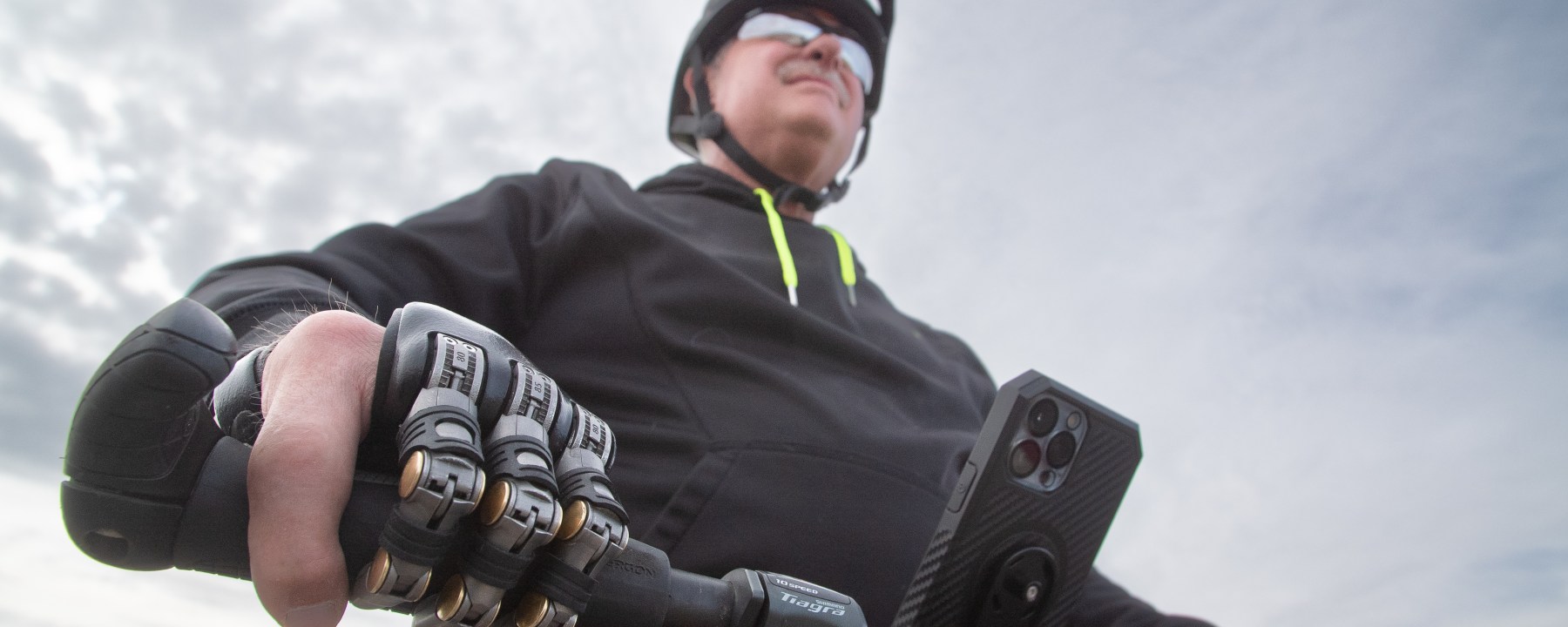
At CU Denver’s College of Engineering, Design and Computing (CEDC), engineering goes beyond equations—it is about solving real problems that change lives. Here, students and faculty work side by side to tackle real-world challenges, designing solutions that leave lasting impacts on lives and communities. One powerful example: the medical device start up, Point Designs, co-founded by Richard Weir, PhD, a Research Associate Professor in the Department of Bioengineering in the College of Engineering, Design and Computing University of Denver | Anschutz Medical Campus, is transforming the future of prosthetics for individuals with partial hand amputations.
“We seek to find creative and innovative solutions to user centered problems for people with upper-limb loss,” says Professor Weir. “Everything we do is framed by an ultimate goal of translating things to the field where our solutions can have the most impact on people’s lives. We are all about trying to make a real difference in the lives of people with limb loss.”
Professor Weir directs the Weir Biomechatronics Development Laboratory at CU Denver and is also a Research Career Scientist at the Rocky Mountain Regional VA Medical Center, which has provided strong support for this work. He collaborated with Dr. Levin Sliker, Dr. Jacob Segil, and Mr. Stephen Huddle to co-found Point Designs. Dr. Sliker, the current CEO of Point Designs, is a former Assistant Research Professor in Bioengineering at CU Denver and CU Boulder Mechanical Engineering graduate. Dr. Segil, a former PhD student in Weir’s lab., and CU Boulder Mechanical Engineering graduate, is now the Paul M. Rady Mechanical Engineering Research Professor and Managing Director of the Center for Translational Research at CU Boulder. Mr. Stephen Huddle, a former master’s student in Weir’s lab and CU boulder Mechanical Engineering graduate is the Manager of Weir’s Lab.
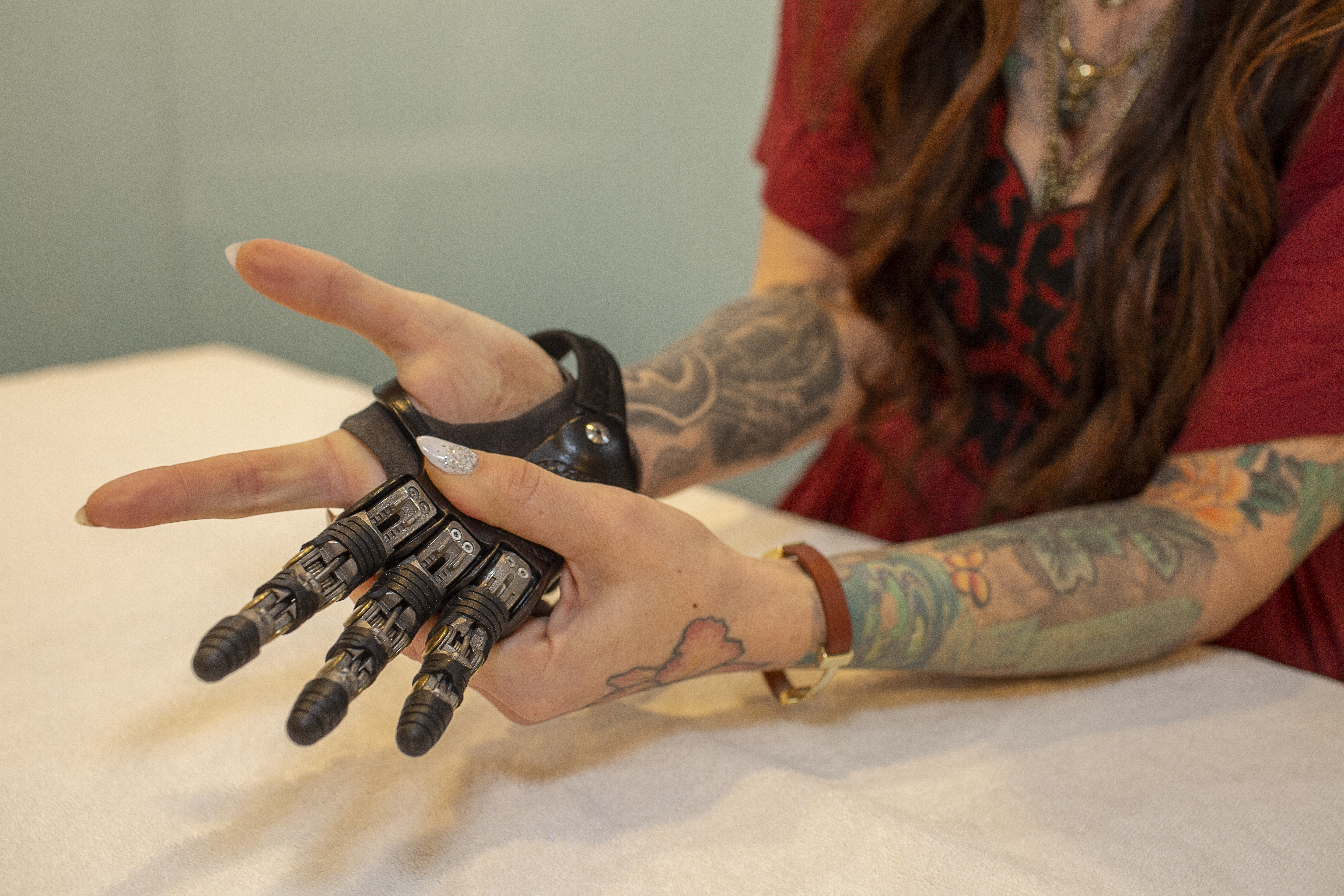
Together, they developed durable, 3D-printed prosthetic fingers for individuals with partial hand amputations. This work is made possible thanks to a 3D metal printer from a 2012 VA equipment grant. They feature a ratcheting mechanism printed in high-strength titanium, allowing users to regain a strong, reliable grip and greater autonomy in daily tasks.
“We have pioneered the use of advanced fabrication technologies like 3D metal printing,” adds Professor Weir. “The lab can rapidly test custom parts and develop new prosthetic solutions—sometimes creating things that wouldn’t be possible otherwise.”
The design is not only functional, but also deeply human-centered, restoring dignity and independence to those who use it and addressing a gap in the market for partial hand prosthetics.

Now, that impact is about to scale. Point Designs recently announced it was acquired by Hanger, Inc., one of the world’s leading providers of orthotic and prosthetic care, and innovative products and services. This partnership means the prosthetic innovations pioneered in CU Denver’s labs will soon reach more patients around the world, amplifying the life-changing work that began right here on campus.
“We are driven to get inventions into the field, as seen with Point Designs or the licensing of other technologies to other companies,” says Weir. “We have a commitment to improving quality of life. That shared goal adds meaning to the work and keeps people motivated.”
Beyond being a corporate milestone, the acquisition of Point Designs is a powerful testament to the transformative potential of engineering education at CU Denver. At CEDC, technical rigor is married with empathy, creativity, and innovation. Students gain access to cutting-edge research opportunities, world-class faculty like Professor Wier, and a curriculum designed to prepare them for real-world problems that need solving.
“Students develop critical, independent thinking skills by applying what they learn to real research questions,” says Weir. “These experiences help students figure out their true interests, often inspiring them to pursue meaningful, impactful careers.”
This is what engineering at CU Denver looks like: immersive, hands-on, and driven by purpose. Students don’t just study theory, they contribute to tangible breakthroughs alongside leading researchers and industry pioneers. From day one, they’re encouraged to think critically, collaborate across disciplines, and put people at the heart of every solution.
Our graduates make a profound impact that travels far beyond the classroom, because at CEDC, we don’t just prepare engineers. We empower changemakers who are building a better future.
Categories
Discover more from College of Engineering, Design and Computing News
Subscribe to get the latest posts sent to your email.

CU Denver Engineering, Design and Computing View All
At the CU Denver College of Engineering, Design and Computing, we focus on providing our students with a comprehensive engineering education at the undergraduate, graduate and professional level. Faculty conduct research that spans our five disciplines of civil, electrical and mechanical engineering, bioengineering, and computer science and engineering. The college collaborates with industry from around the state; our laboratories and research opportunities give students the hands-on experience they need to excel in the professional world.
 College of Engineering, Design and Computing News