

Training Engineering Faculty to Turbocharge Classes with Learning Assistants
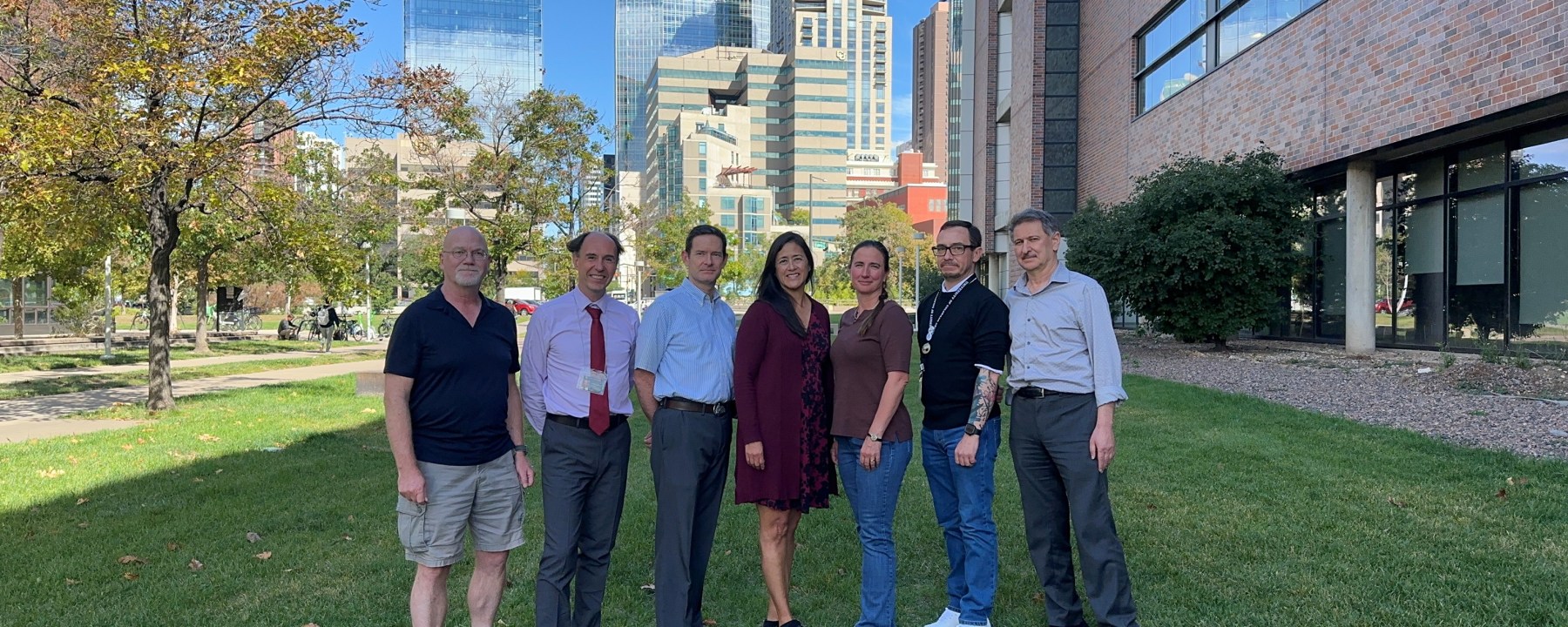
CU Denver Expands Proven Model to Strengthen STEM Teaching and Student Success
When CU Denver engineering students walk into class, they’ll soon have more support than ever thanks to an innovative new approach that pairs faculty with trained undergraduate learning assistants to make every lesson more engaging, inclusive, and effective.
Thanks to a major new award from the U.S. National Science Foundation’s (NSF) Hispanic Serving Institutions (HSI) program, CU Denver is expanding one of its most successful teaching models to the College of Engineering, Design, and Computing, to give engineering students more personalized support, more hands-on learning, and more pathways to success.
The initiative, called Learning Assistants–Inclusive Teaching Community (LA-ITC), connects engineering faculty and students in powerful new ways. It pairs professors with trained undergraduate Learning Assistants (LAs) and supports faculty through CU Denver’s Inclusive Teaching Community (ITC) to create classrooms where every student has the tools and confidence to succeed. “Engineering thrives when we build on recent advances in science, and that is very much in the spirit of LA-ITC,” says Principal Investigator and Civil Engineering and Construction associate professor David Mays.
“First, we build a prototype, transplanting the proven best practices developed by our colleagues in biology and education into our five departments of engineering and computer science. Then we optimize the prototype to engage as many engineering faculty as possible.”
What Are Learning Assistants?
Learning Assistants are undergraduate students who excelled in a course and are now trained to help their peers navigate it. They are not graders or teaching assistants—they are near-peers who understand exactly where students may get stuck and how to help them move forward.“It’s like having a teammate in your class who’s already made it to the finish line and is now showing you the way,” says Karl Diaz-Sanders, Student Success Coach.
“They’re relatable, they understand the material, and they make big classes feel personal.”
The Learning Assistant model has already transformed teaching and learning in CU Denver’s College of Liberal Arts and Sciences, where more than 200 LAs support STEM courses each year. Courses that include LAs have seen higher engagement, improved grades, and fewer drop/fail/withdrawal rates—results that CEDC expects to mirror.
“It’s amazing what happens when you empower students to help other students,” says integrative biology professor Laurel Hartley, co-director of CU Denver’s LA Program. “We’ve seen learning assistants create real change in the classroom—and we’re thrilled to bring that impact to engineering.”
Expanding a Proven Model for Student Success
Building on 13 years of success in CLAS, the NSF award will extend CU Denver’s LA Program into CEDC. As part of this expansion, engineering and computer science courses will begin integrating Learning Assistants directly into the classroom. Over the next several years, three cohorts of engineering faculty will participate in the Inclusive Teaching Community, where they will earn digital badges in inclusive pedagogy and apply new teaching strategies to their courses. At the same time, the research team will study how best to scale this effective, equity-centered model across a large, public, urban research university—ensuring CU Denver can continue to adapt and grow the program for long-term impact.
Building Classrooms That Work for Every Learner
At its core, the LA-ITC project is about meeting students where they are.
“With the diversity of learners continuing to grow, it’s essential that we design learning experiences that make sense for every student,” Diaz-Sanders says. “In STEM especially, we need teaching methods that adapt to different learning styles and lived experiences.”
Diaz-Sanders adds that the benefits of this work extend far beyond the classroom: “When we focus on the whole student—their academics, culture, and community—we see lasting results. Higher education can be a pathway to economic mobility and generational wealth, empowering students to thrive in careers that make a difference.”
The Power of Learning Assistants
Learning Assistants act as built-in feedback loops—helping students stay engaged and helping faculty understand where students need support.
“Feedback is essential for optimizing any system,” Mays says. “So why not build it directly into our engineering classrooms?”
Hartley and science education professor Robert “Bud” Talbot, co-directors of CU Denver’s LA Program, see this expansion as a natural next step:
“Our data show that LA support transforms courses into more student-centered learning environments and reduces DFWI rates by about 10%. We’re excited to bring that same level of transformation to CEDC.”
Training Faculty for Inclusive, Impactful Teaching
The second pillar of LA-ITC focuses on supporting faculty through the Inclusive Teaching Community (ITC), originally launched in 2017 with funding from the Howard Hughes Medical Institute. The ITC helps instructors translate decades of learning science into practical classroom strategies.
“The ITC equips faculty to cultivate spaces where both students and instructors can thrive,” says Jason Drysdale, director of program development for CU Denver’s Division for Teaching Innovation and Program Strategy. “Through LA-ITC, faculty intentionally design courses that center student success and embrace the diverse ways our learners engage with STEM.”
Research, Reflection, and Real Impact
The groundwork for LA-ITC began with a Grand Challenge Team Award during the 2024–25 academic year, with support from CU Denver’s Office of Research Services. That collaboration led to a comprehensive self-study by Christine Velez and colleagues at The Evaluation Center, which gathered insights from 35 students, nine faculty, and four staff. The findings directly informed the NSF proposal. Mays reflects, “Students told us what’s working—and our goal with LA-ITC is simple: amplify those winning strategies. When we listen to students and act on their feedback, everyone succeeds.”
A Future of Learning That Reflects the Real World
As CU Denver advances its role as a Hispanic-Serving and equity-serving institution, LA-ITC stands as a model for how innovation, inclusion, and evidence-based teaching can transform engineering education.
By combining faculty development, student leadership, and evidence-based research, CU Denver is preparing the next generation of engineers—not only to solve complex technical problems, but also to lead with empathy, creativity, and impact.
Categories
Discover more from College of Engineering, Design and Computing News
Subscribe to get the latest posts sent to your email.

CU Denver Engineering, Design and Computing View All
At the CU Denver College of Engineering, Design and Computing, we focus on providing our students with a comprehensive engineering education at the undergraduate, graduate and professional level. Faculty conduct research that spans our five disciplines of civil, electrical and mechanical engineering, bioengineering, and computer science and engineering. The college collaborates with industry from around the state; our laboratories and research opportunities give students the hands-on experience they need to excel in the professional world.
 College of Engineering, Design and Computing News