
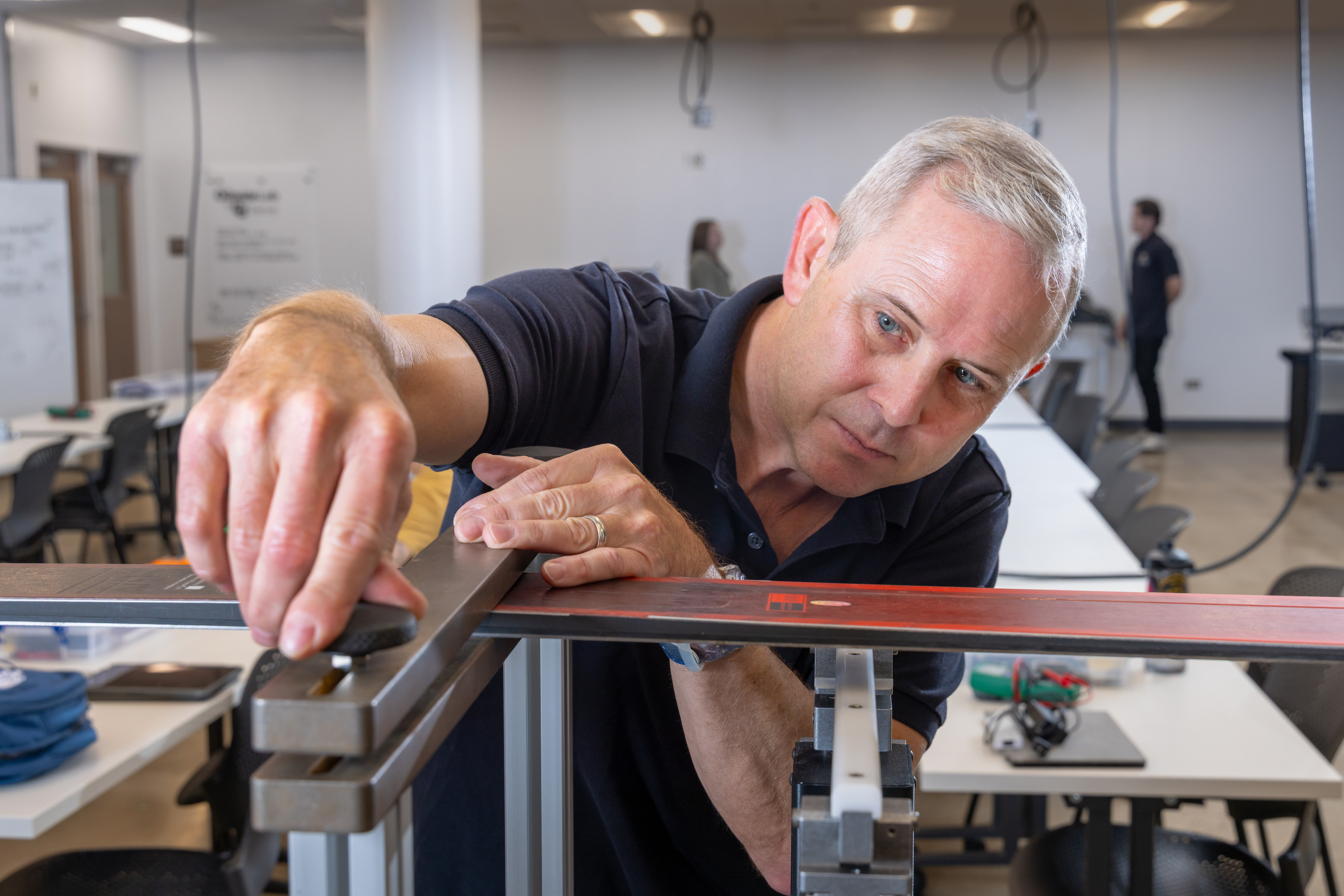
At the University of Colorado Denver’s College of Engineering, Design and Computing, students aren’t just learning engineering theory in a classroom. They’re developing impact systems, analyzing running footwear geometry, testing sun-protective apparel, and helping outdoor brands better understand how products perform in the real world.
Inside the Outside Lab, engineering education looks a little different by design.
The lab was created to help brands and consumers better understand product performance through objective, lab-based testing. Working at the intersection of engineering, research, and outdoor industry innovation, students help design testing protocols that replicate how outdoor products actually fail in the field — from footwear and outerwear to impact attenuating (or absorbing) materials and camping necessities.
“In general, the lab’s goal is to help brands and consumers better understand product performance by providing objective, lab-based data regarding various metrics for a given product,” said Trevor Young, Outside Lab Manager. “We do this primarily by designing testing protocols intended to closely replicate real world failure modes of outdoor gear. So in short, the lab is trying to tackle any real-world issues a brand present us with.”
That hands-on philosophy is central to the student experience.
Engineering Education Built Around Application
The Outside Lab provides students with foundational engineering knowledge while immersing them in product research, development, and testing processes commonly used across industry. Unlike many traditional engineering programs, the work emphasizes applied learning and direct industry relevance from the beginning.
“To the best of our knowledge, it is the only program of its kind,” Young said, “spanning numerous different product categories, possessing both research and development capability and providing invaluable industry connection through the combination of CU and Outside.”
Students can begin working in the lab as early as their first semester, gaining experience with testing equipment, research, design and product development workflows typically associated with industry settings rather than undergraduate classrooms.
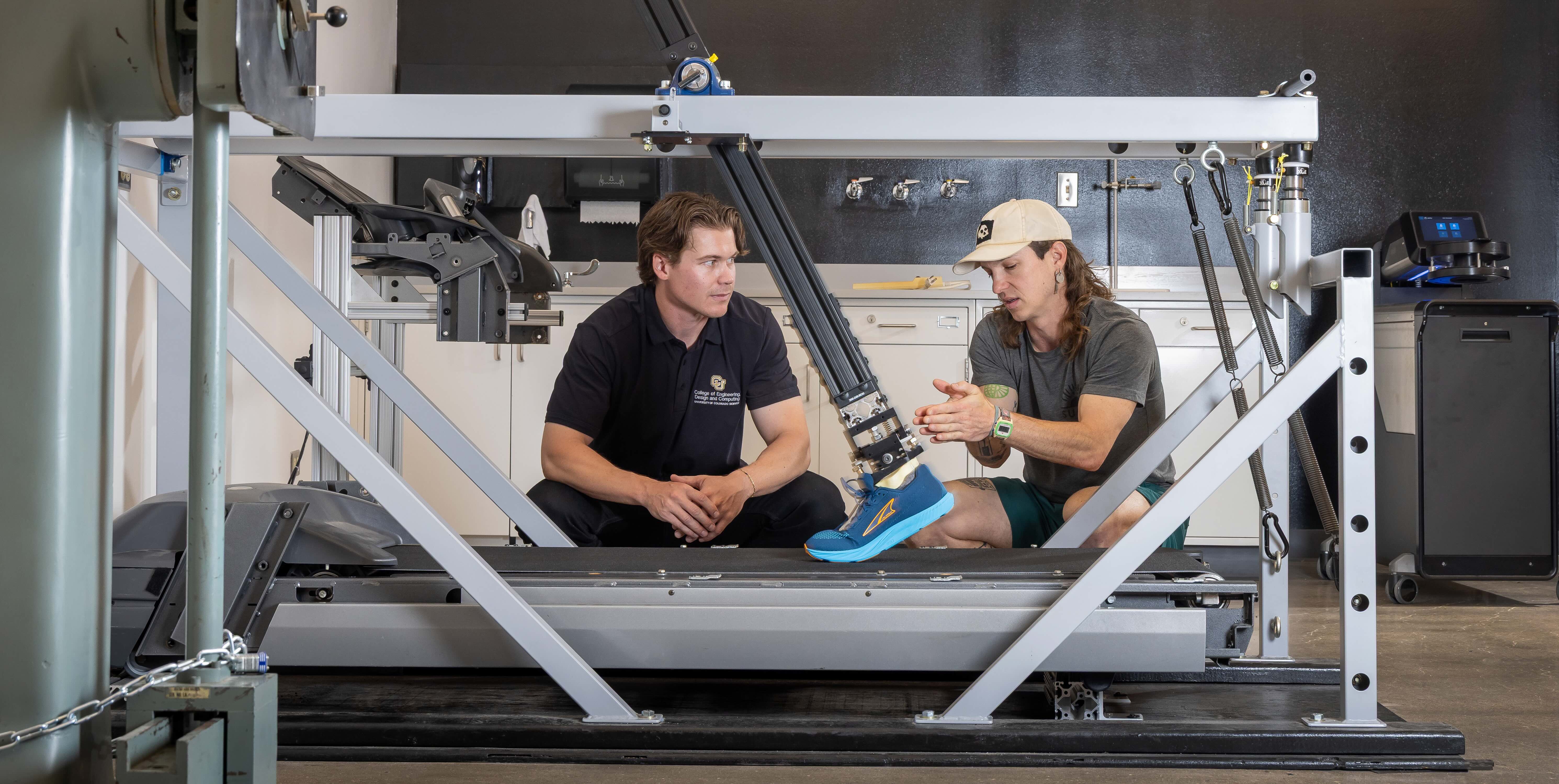
Current student-led projects include developing systems to better understand footwear geometry and its potential relationship to running economy, testing impact attenuation mechanics and building a UPF testing system to measure sun protection performance in outerwear.
The work mirrors the kind of technical problem-solving students may encounter after graduation, often using the same equipment manufacturers use themselves.
“Many of the machines we have in the lab were suggested by or identical to the ones used at numerous manufacturer facilities,” says Young. “Our goal is to provide enough testing experience that our students feel comfortable working with machines and equipment in a controlled lab setting.”
Denver’s outdoor industry becomes the classroom
The lab’s location in Denver gives students unusual proximity to both outdoor brands and the environments where products are actually used.
“We are fortunate to be able to establish this lab in a place like Denver given its proximity to the locations where people are frequently using all of the gear we test,” Young said. “It is widely regarded as a hub for outdoor adventures and we certainly benefit from being located near so many outdoor gear brands and places to use their products.”
That connection allows students to move between controlled laboratory testing and field testing in Colorado’s outdoor environments — an advantage few university programs can replicate.
“Our approach is focused on hands-on learning and working directly with brands/products that students may like to work on post-grad,” said Young. “In addition, given our connection to Outside, our connections to industry and proximity to outdoor adventure locations we have the luxury of performing both in-lab and field testing, identifying potential correlations therein.”
The partnership also gives students direct exposure to industry workflows and expectations before graduation. Students have designed new testing systems, researched finished consumer products and participated in Outside review testing while still enrolled at CU Denver.
For graduate of the program Corey Cox, the collaborative and industry-connected environment became one of the most valuable parts of the experience.
“Not only do we have the ability to learn from world-class engineers and researchers at CU Denver, but being a student afforded me opportunities to connect with industry leaders and experts in a casual and non-competitive way,” Cox said. “Many people are willing to go above and beyond to advance a student’s learning if you approach them with an honest and open attitude.”
A Different Kind of Engineering Program
The program intentionally approaches engineering education from a broader, more human-centered perspective.
“Our program has taken a slightly different approach than most traditional engineering programs,” says Young. “While we do teach engineering theory, we have geared our program more towards understanding its application relative to the products we’re testing.”
The curriculum also incorporates sustainability and human-centered design, crucial topics to the outdoor industry that are often underrepresented in traditional engineering education.
“Many traditional programs omit classes or discussions of sustainability and human-centered design,” Young said. “Since we work in an industry that produces consumer product, we felt that both of those topics were important to include in our education. (A sentiment that has been echoed by our industry connections).”
One recent student research project explored the relationship between outerwear durability and sustainability, examining how product longevity impacts overall environmental footprint.
“While many sustainability efforts focus on reducing environmental impact during manufacturing, a product that fails early and must be replaced more often can ultimately create a larger lifetime footprint,” says Young. By studying both durability and environmental impact together, students help provide brands with data that can inform longer-lasting product design while reducing waste.
The research reflects a broader shift happening inside the outdoor industry, where brands increasingly need engineering data to support sustainability claims, material choices and product performance expectations.
Meeting your Moment
For students, that means working on projects with immediate industry relevance while building technical skills that extend far beyond the classroom.
“Working in the lab prepares students for work outside of the university by offering greater breadth and depth of testing and design experience than they receive through class work alone,” Young says.
For Cox, the experience ultimately reshaped how he viewed his own potential.
“I have not only gained industry relevant experience, knowledge, and professional support, but I now know I have the ability to quickly adapt, learn hard things, and the confidence to feel competitive in a field I had zero chances in before,” Cox said.
That transformation reflects the program’s broader impact: connecting students to Colorado’s thriving outdoor industry, immersing them in meaningful industry partnerships, and empowering them to solve the same challenges engineers and product designers face in the field every day.
As Colorado’s outdoor industry continues to evolve, the demand for engineers who can design, test, and innovate in real-world conditions is only growing. Outside Lab is helping meet that moment by turning students into collaborators long before they graduate. For students, that means graduating not only with technical expertise, but with the experience, confidence, and industry connections to help lead what comes next.
Interested in product testing, outdoor industry innovation or hands-on engineering research? Connect with the Outside Lab to explore research opportunities, testing projects and industry-focused experience inside CU Denver’s College of Engineering, Design and Computing.
Leave a Reply