
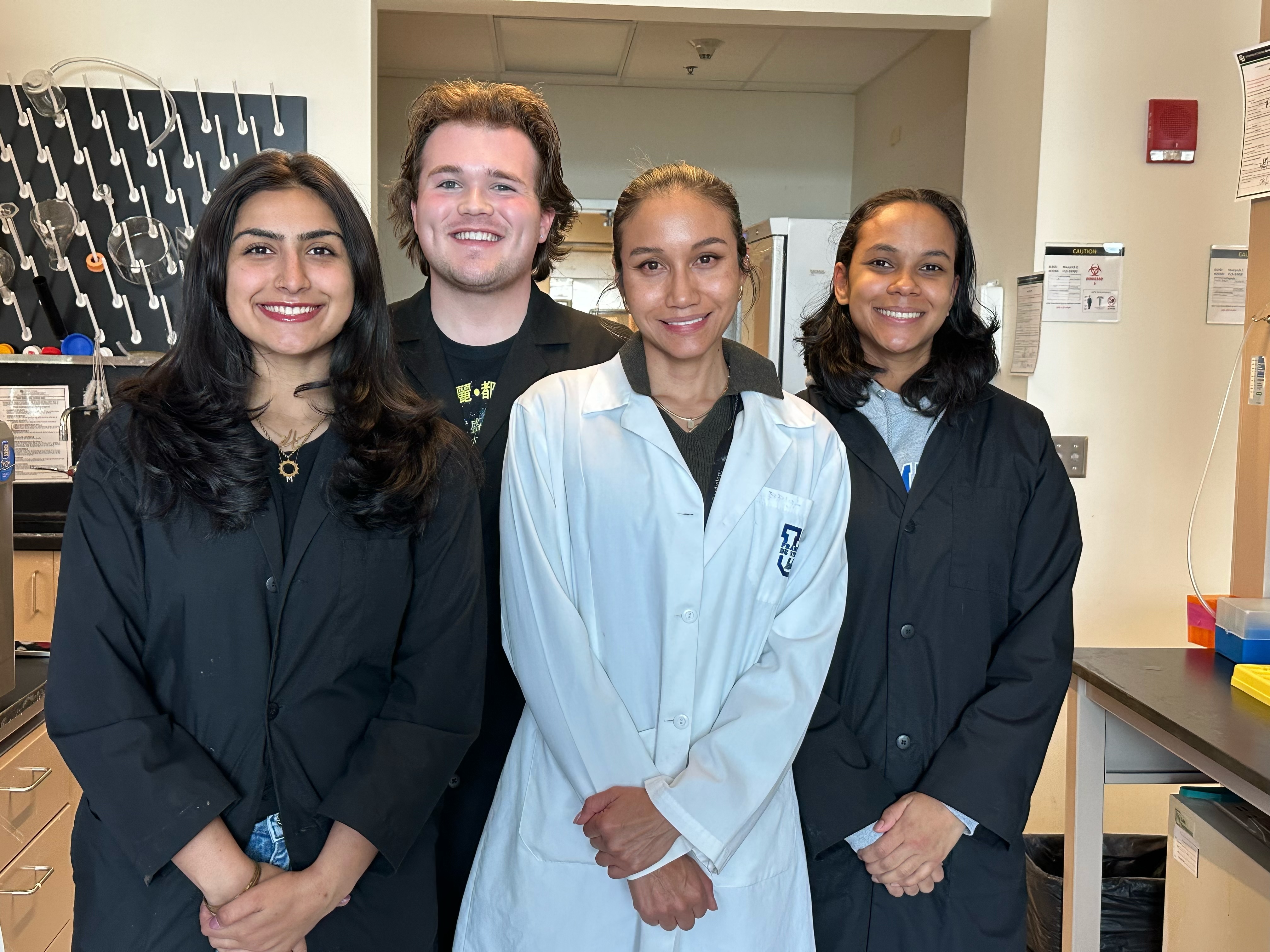
Brisa Peña, PhD, is working on a problem that sits at the intersection of medicine, access, and time: how to prevent organ transplant rejection before it begins. With support from the National Institute of Biomedical Imaging and Bioengineering, she has received an R21 Trailblazer Award—funding designed to move bold, early-stage ideas toward real-world use.
“Our project focuses on improving outcomes in organ transplantation by creating a new type of biomaterial that can be applied directly to the donor organ before transplantation. This material is designed to both protect the organ during the most vulnerable period after transplant and deliver targeted therapies to specific donor immune cells that drive rejection,” says Peña.
A new starting point for transplantation
Much of transplant care today is reactive. Interventions typically begin after signs of rejection appear. Peña’s work focuses on intervening earlier, at the level of the donor organ itself.
“Most current approaches address transplant rejection only after it has already begun and rely on systemic immunosuppression, which can cause significant side effects,” says Peña. “In contrast, our approach is applied directly to the donor organ before transplantation and is designed to deliver therapy locally and selectively. This enables us to target key immune cells at the earliest stages of rejection, potentially reducing the need for broad immunosuppression.”
The potential impact is not only clinical, but structural.
“This approach could improve long-term transplant success by reducing early inflammatory responses and preventing rejection,” says Peña. “ It may also allow the use of donor organs that are currently considered too high-risk, ultimately increasing the number of viable transplants and saving more lives.”
Work like this addresses a persistent gap in healthcare: not just improving outcomes for those who receive care but expanding who can access it in the first place.
“We are excited about the potential of engineering-based approaches to transform how we think about transplantation, not just organ treating rejection, but preventing it from the very beginning.”
A public university, working on public problems
At CU Denver, research priorities are closely tied to real-world needs—particularly in health, infrastructure, and access. Projects are often developed in partnership with clinicians, communities, and other campuses, with the expectation that solutions extend beyond the lab.
“This collaboration brings together expertise in biomaterials and nanotechnology from my lab with deep knowledge of transplant immunology and in vivo models from the Kopecky Lab. It allows us to design solutions that are both innovative from an engineering perspective and directly relevant to real clinical challenges.”
That kind of integration is a consistent feature of biomedical engineering work at CU Denver, particularly through connections with the CU Anschutz Medical Campus in our Biomedical Engineering department.
“This project highlights CU Denver’s strength in interdisciplinary research, combining engineering, biology, and clinical insight. It also reflects strong collaborations across campuses, particularly with CU Anschutz, to address clinically meaningful problems.”
Preparing students to contribute early
Part of that responsibility is how students are trained. At CU Denver, research is part of the educational experience, with students gaining hands-on experience that sets them apart from their peers.
“Our students play a central role in this work, from designing and fabricating the biomaterials to testing them in biological systems. Their contributions are essential to moving the project forward, and this award allows us to further support their development as independent researchers” says Peña. “Currently, three graduate students in the Biomedical Engineering Department, Sara Musani, Victoria Crane, and Tristan Cobb, are actively working on this technology.”
Students are not only learning established methods. They are working on unresolved problems, contributing to funded research, and developing skills that translate directly into fields where those problems continue.
“This award is an exciting milestone for our lab. It provides critical support to pursue innovative, high-risk ideas and offers valuable training opportunities for students working at the intersection of engineering and medicine,” says Peña. “It also helps position our trainees to contribute to translational research that can have real patient impact.”
Extending impact beyond the lab
The next phase of Peña’s work focuses on demonstrating results and preparing for broader application.
“In the near term, we hope to demonstrate improved transplant outcomes in preclinical models, she says. “Looking ahead, this work could lead to new therapies that are applied directly to donor organs prior to transplantation, helping to reduce rejection, improve graft survival, and expand access to transplantation.”
A different way to define impact
At CU Denver, engineering is not pursued in isolation from the world’s challenges, it is shaped by them. Across the College of Engineering, Design and Computing, research is driven by the belief that innovation should do more than advance a field; it should improve lives, expand access, and create meaningful change in the communities it serves.
Peña’s work embodies that approach. By bringing together biomaterials engineering, immunology, and translational medicine, her research is not only advancing the future of organ transplantation, but reimagining what is possible when engineering intervenes earlier, more precisely, and with patient outcomes at the center.
It also reflects the experience students gain at CU Denver: the opportunity to contribute to consequential research alongside faculty tackling some of healthcare’s most complex problems. In Peña’s lab, students are building the solutions to today’s problems.
As the project moves toward preclinical validation and future clinical applications, its impact already extends beyond the laboratory. It represents a broader vision for engineering at University of Colorado Denver: research grounded in collaboration, connected to real human needs, and designed to create solutions that matter.
Explore what’s possible.
Learn more about biomedical engineering and research opportunities at CU Denver—and how you can be part of work that’s improving patient care and expanding access to life-saving treatments.

Leave a Reply