
New collaboration expands global research opportunities and gives students access to the faculty, research, and partnerships shaping modern engineering.
Most people cross a bridge without thinking twice about it.
They don’t see the decades of research behind the materials. They don’t see the structural systems carrying thousands of vehicles each day. And they rarely think about the engineers working behind the scenes to ensure those structures remain safe, resilient, and ready for the future.
But Professor Yail Jimmy Kim does.
As a professor in CU Denver’s Department of Civil Engineering and Construction as well as an internationally recognized leader in bridge engineering, Kim has spent his career tackling infrastructure challenges that affect millions of people every day. Increasingly, those challenges extend far beyond any one city, state, or country.
Around the world, engineers are confronting aging infrastructure, growing transportation demands, climate-related pressures, and the need for smarter, more resilient systems. Solving those problems requires more than technical expertise. It requires collaboration across industries, disciplines, and borders.
Kim is leading that effort through a new international partnership designed to connect experts, accelerate innovation, and strengthen the future of bridge engineering.
Driving Innovation Through Global Collaboration
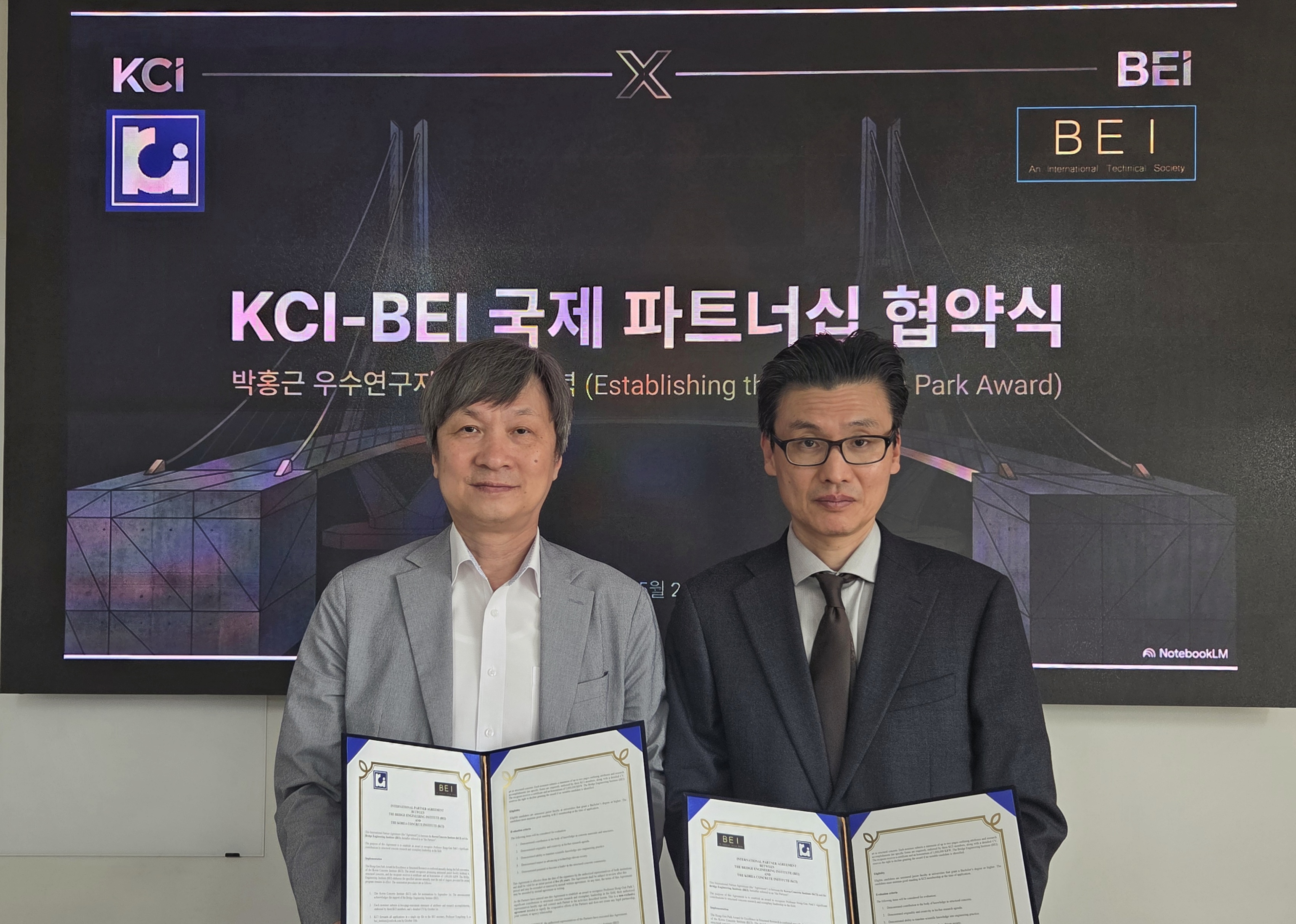
Representing the Bridge Engineering Institute (BEI), Kim recently traveled to South Korea to formalize a memorandum of understanding with the Korea Concrete Institute (KCI), one of the country’s leading organizations dedicated to concrete engineering and construction.
As a leader within the BEI, Kim helps connect researchers, educators, and practitioners from around the world through initiatives focused on research advancement, professional development, and mentorship. The institute’s Committees include 30 internationally recognized professors and engineers.
The new partnership with KCI builds on that foundation, creating new opportunities for research partnerships, professional engagement, and knowledge exchange while establishing a framework for long-term collaboration between engineering communities in the United States and South Korea.
The partnership also launches a new research award program recognizing innovation and excellence among both emerging and established scholars, helping elevate groundbreaking work across the global engineering community.
While the agreement was signed thousands of miles from Denver, its impact reaches much closer to home.
It reflects how faculty like Kim are connecting students to the global networks, emerging technologies, and real-world infrastructure challenges shaping the future of engineering. At the same time, it reinforces CU Denver’s growing role as a place where research, industry, and international expertise come together to solve problems that matter on a global scale.
Learning from faculty shaping the profession
For students pursuing careers in civil engineering, infrastructure, transportation systems, and structural design, the future of the profession will be defined by collaboration. The challenges facing civil engineers today will require partnerships that bring together researchers, industry leaders, and practitioners from around the world.
That reality is changing what engineering education looks like.
At CU Denver’s College of Engineering, Design and Computing, we are committed to connecting students with faculty who are helping shape the conversations, technologies, and professional networks driving the future of engineering.
Kim’s work reflects the kind of faculty leadership that provides a transformative engineering education, giving students access not only to knowledge, but also to the professional networks, global perspectives, and real-world collaborations that help turn potential into impact.
Kim’s work spans bridge engineering, advanced composite materials for structural rehabilitation, structural informatics, complex systems, and science-based structural engineering.
His research focuses on understanding how complex infrastructure systems perform and how emerging technologies can improve safety, resilience, and long-term performance. As transportation networks age and communities face increasing demands on critical infrastructure, those questions have become more important than ever.
Those contributions have earned some of the profession’s highest distinctions. Kim received the Chester Paul Siess Award for Excellence in Structural Research from the American Concrete Institute, widely regarded as one of the field’s most prestigious honors. He is also a Fellow of the American Concrete Institute, a distinction reserved for individuals who have made significant contributions to concrete engineering, research, education, and practice.
For students, those accolades represent more than professional recognition. They are evidence of something larger: the opportunity to learn from faculty whose expertise is respected throughout the engineering profession and whose work continues to influence the future of infrastructure around the world.
As bridge engineering evolves alongside advances in materials science, structural monitoring, artificial intelligence, and data-driven infrastructure management, those connections become increasingly valuable.
Building the future, together
The Bridge Engineering Institute’s international momentum will continue this summer when it hosts its annual conference in Singapore, bringing together researchers, industry leaders, and practitioners from around the world to discuss advances in infrastructure resilience, structural monitoring, emerging materials, and bridge engineering.
For Kim, the work is ultimately building the relationships that make innovation possible. It is about creating pathways for collaboration, accelerating discovery, and preparing future engineers to solve challenges that increasingly span industries, technologies, and continents.
As those connections grow, so does CU Denver’s role in shaping the future of engineering, one where students learn faculty who are helping define where the profession is headed next—and gaining a front-row seat to the ideas, partnerships, and innovations that will shape the infrastructure of the future.
Leave a Reply