
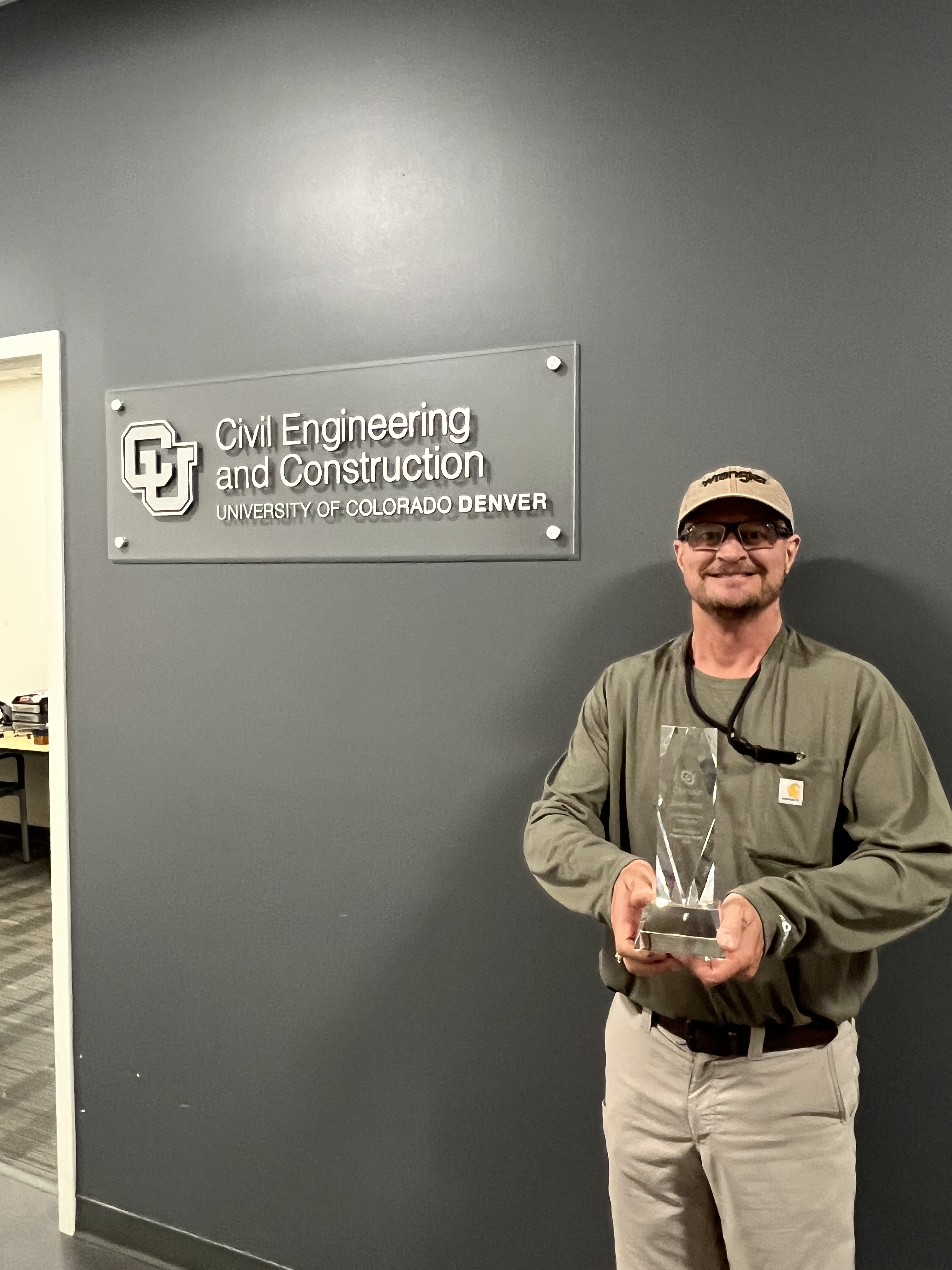
After 17 years as department chair, Kevin Rens leaves a legacy of opportunity, innovation and student success at CU Denver.
When Kevin Rens, PhD, PE, became chair of CU Denver’s Civil Engineering and Construction Department 17 years ago, Colorado was entering an era of unprecedented growth. Major transportation projects were still on the drawing board; communities were expanding rapidly, and demand for engineers and construction professionals was rising faster than universities could prepare them.
Rens recognized the opportunity.
Over the next 17 years, he helped transform the department into one of Colorado’s most connected engineering programs; expanding academic offerings, deepening partnerships with industry and creating an educational experience built around solving real problems in the real world.
“I’ve grown to love the urban community and everything around it over the years,” says Rens. “Simply put, the city and campus are now my treasured home”
That appreciation for the city became central to his leadership. Under Rens, Denver became more than the department’s home; it became its classroom and laboratory.
As he steps down as department chair this July, Rens leaves behind more than new degree programs and departmental milestones, but a culture rooted in one enduring belief: engineers learn best by doing.
Building programs for Colorado’s workforce
Under Rens’ leadership, the department expanded beyond traditional civil engineering with the launch of Construction Management and Construction Engineering and Management degree programs, responding directly to workforce needs across Colorado and the nation.
The department’s evolution also led to its current name: the department of Civil Engineering and Construction, reflecting a broader mission to prepare graduates who can lead projects from planning and design through construction and infrastructure management.
Today, students graduate ready to manage major construction projects, improve transportation systems, and build the infrastructure that keeps communities moving.
Where the city becomes the classroom and Laboratory
Rens has always believed the best engineering education extends far beyond campus.
A nationally recognized structural engineer specializing in bridge safety and forensic engineering, he routinely brought his externally funded research work with the City and County of Denver into the classroom. Students analyzed active projects, investigated real engineering challenges, and gained insight into professional decision-making before earning their degrees.
“Getting out into the field and being involved—that’s what makes a civil engineer or construction manager successful,” Rens says.
That hands-on philosophy continues to define the department. Faculty combine industry practice, applied research and professional partnerships to give students experiences that mirror the work they’ll do after graduation.
Building careers through relationships
Ask Rens what makes a successful engineer, and he doesn’t begin with technical skills.
“The ability to give back through involvement in professional societies and student organizations,” he said. It’s the same message he shares with students: careers are built through relationships as much as coursework.
Rens has followed his own advice throughout his career. An active continuous member of the American Society of Civil Engineers since 1983, Rens has contributed extensively to the Technical Council on Forensic Engineering while mentoring students to become leaders within the profession long before they enter the workforce.
Student organizations, industry networking, internships and professional engagement often become the relationships that lead to first jobs, lifelong mentors and future collaborations. That emphasis on community has become embedded in the department’s culture.
Leading through growth
When asked what accomplishment makes him most proud, Rens doesn’t point to a single moment.
Instead, he reflects on the department’s steady growth: launching new academic programs, maintaining stable continuous external funding through changing economic conditions and cultivating an industry community that consistently invests in student success.
“Our industry partners have always been willing to give back,” Rens said. “They’ve invested in our students and helped prepare the next generation of engineers.”
Today, those partnerships support internships, senior design projects, guest lectures, research collaborations, and career opportunities across Colorado’s engineering and construction industries.
A legacy that continues
Rens’ impact has been recognized with numerous honors throughout the years, including the College of Engineering, Design and Computing Outstanding Teaching Award, Outstanding Research Award, Outstanding Service Award and Outstanding Faculty Mentor Award, as well as the CU Denver Urban Engaged Scholar Award and the CU Denver Outstanding Faculty in Leadership & Service Award.
This year, he became the inaugural recipient of the CECD Partner in Philanthropy Award for his efforts to expand scholarship support, strengthen opportunities for students, and connect with Alumni. He and his longtime friend, business partner, and CU Denver alum Amy Rens established an endowed scholarship to help future engineers pursue their education at CU Denver. Named R.E.N.S. (Rising Engineering NextGen Scholars), the scholarship is designed to expand access to engineering education by supporting students who are the first in their families to attend college and others who may face financial or educational barriers to earning their degree.
Although he is stepping away from departmental leadership, Rens isn’t leaving engineering. He will take a sabbatical during the next academic year and continue research with the City and County of Denver, where he will join their bridge group. He then plans to return to CU Denver as a professor and active researcher.
“I really look forward to doing more research and publishing more papers,” Rens said. “But I also look forward to having a different and new department leader who can bring new perspectives to the department.”
Beginning July 1, Wesley Marshall, PhD, PE, will serve as the department’s next chair.
“I wanted to acknowledge the work that Kevin has done as chair over the past 17 years,” Marshall said. “I’ve long appreciated that his leadership has always been grounded in common sense, humility, and trust. He gives people room to do what they do best, asks questions instead of pretending to have all the answers, and never loses sight of the fact that our department succeeds because of the people in it. Those qualities have shaped our culture as much as any program or initiative we’ve done along the way, and they are a big part of the foundation I hope to carry forward.”
Advice for the next generation
After decades of educating engineers, Rens offers students two simple pieces of advice.
“Pick one student professional organization or club and stick with it and get involved in it. It will give you benefits throughout your entire career,” he said. “And never burn a relationship bridge. You never know when you’ll need to work with those people again.”
It’s fitting advice from someone whose career has been defined by building connections between students and industry, classrooms and job sites, research and practice, while researching over 600 literal bridges in the City and County of Denver.
For Rens, the measure of success has never been the programs he launched or the awards he received. It’s the graduates who leave CU Denver ready to solve complex problems, strengthen communities, and lead the future of engineering.
As he returns to teaching and research and the department enters its next chapter with a strong foundation: industry partnerships that open doors, faculty who bring professional expertise into the classroom and a culture built around preparing students for the work that awaits them beyond graduation.
That’s the legacy Rens leaves behind—not simply a stronger department, but generations of civil engineers and construction managers equipped to build Colorado’s future.
Ready to build the future? Explore CU Denver’s Civil Engineering and Construction programs and discover how industry-connected learning prepares students to design, build, and strengthen the communities where they live and work.
Leave a Reply