
Through national conferences, industry networking and peer leadership, students are finding community and developing the skills and relationships that prepare them for careers in engineering and technology.
For CU Denver student Shana Barkat, a conversation at a national engineering conference led to an interview opportunity. It was the kind of connection that can be difficult to make through a classroom or online job application. But through the Society of Asian Scientists and Engineers (SASE), Barkat had the opportunity to meet professionals, explore career paths and begin building a network in her field.
“From the very first workshop, I made a professional connection that led to an interview opportunity,” Barkat wrote in a reflection on the experience. “For the first time, I could clearly see how attending an event might help me secure an internship.”
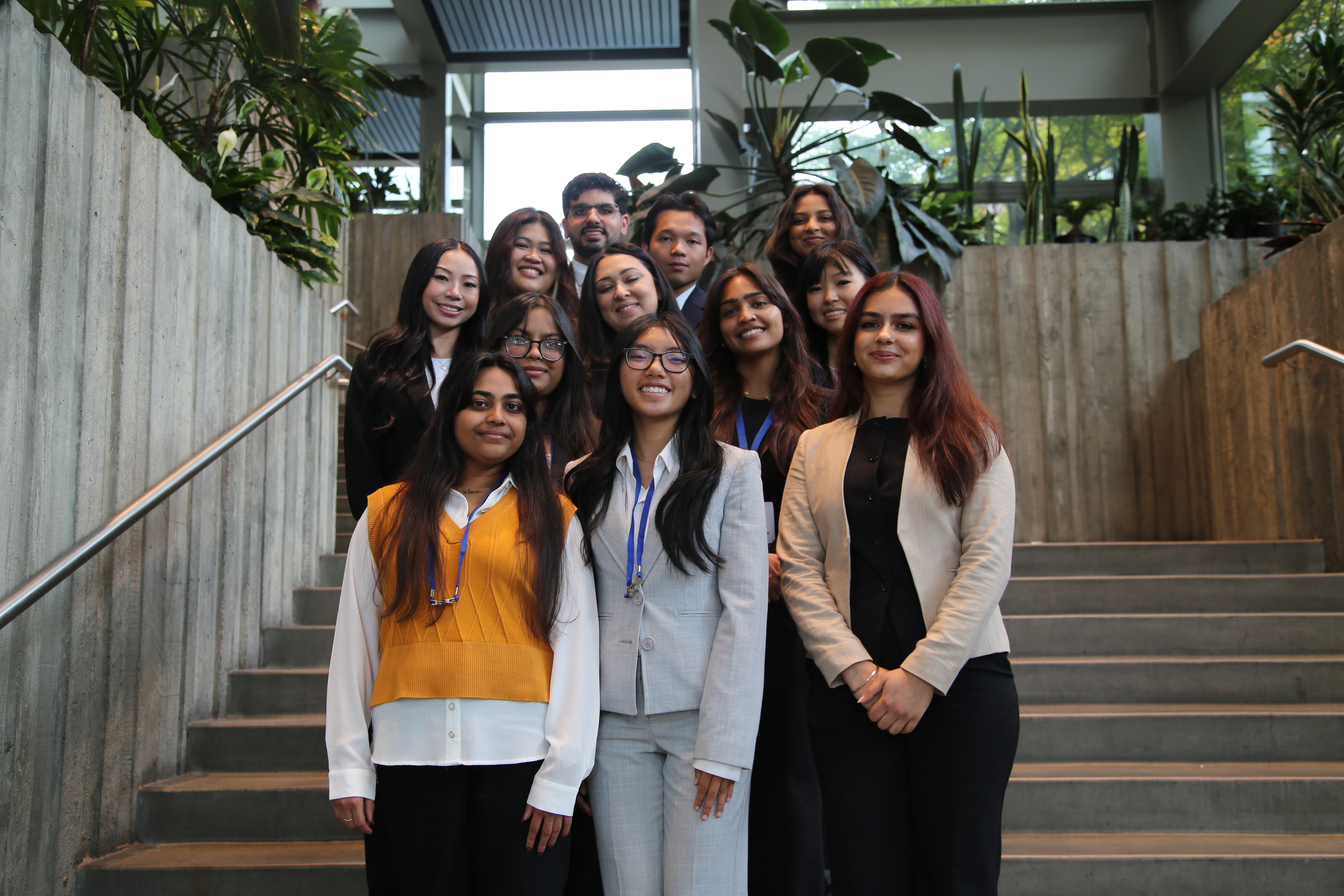
Barkat was among CU Denver students who traveled to Seattle for the 2026 SASE National Convention, where they met recruiters, participated in professional development workshops and connected with students and industry professionals from across the country.
Their experiences highlight an important part of engineering education at CU Denver’s College of Engineering, Design and Computing (CEDC) : the opportunities students create through involvement beyond the classroom.
Student organizations offer a place to find community, develop leadership skills and build relationships with professionals in the industries students hope to enter. For students navigating demanding academic programs and preparing for competitive careers, those connections can make a meaningful difference.
Getting in the Room With Industry
Engineering students spend years developing technical expertise. Learning how to communicate that expertise, navigate professional environments and connect with potential employers requires a different kind of practice. At the SASE convention, CU Denver students had opportunities to do exactly that.
Marcus Kim spoke with recruiters from Blue Origin, Honeywell Aerospace and university research laboratories, receiving resume feedback and practicing interview questions. The experience helped him become more comfortable discussing his qualifications with professionals working in the fields he hopes to enter.
For Jessica Tan, whose experience spans economics, computer science, software engineering and student leadership, a networking workshop featuring representatives from Shell, Chevron and GE Vernova offered insight into presenting a multidisciplinary background to employers.
“With experience in economics, computer science, software engineering, and student leadership, I sometimes have difficulty deciding which parts of my background to highlight,” Tan wrote. “This workshop helped me think about how to connect those experiences into a focused introduction that explains who I am and where I want to go.”
Students also learned how employers assess candidates, the importance of researching organizations before interviews and how to approach networking as a genuine exchange rather than a rehearsed introduction.
Atisha Bajracharya came away with a clearer understanding of how technical knowledge and interpersonal skills work together.
“My biggest takeaway from the conference was that STEM fields do not operate in a vacuum, as every technical skill requires human connection, communication, and a strategic network to turn those skills into career growth,” Bajracharya wrote.
For students, these experiences offer something valuable before graduation: direct exposure to professional expectations and opportunities to build confidence in their ability to participate.
Learning to Lead, Communicate and Collaborate
The skills students practice through professional organizations extend well beyond job interviews. Engineering and computing careers depend on collaboration. Professionals must work across disciplines, communicate complex ideas, navigate challenges and contribute effectively to teams. Student organizations give students room to develop those abilities alongside peers who are learning to do the same.
For computer science student Vic Deguzman, the convention reinforced the importance of speaking up, asking questions and taking initiative in collaborative environments.
“Communication is the best skill to have, especially in a field like Computer Science,” Deguzman wrote.
His reflection acknowledged the challenges of contributing confidently during group projects and the importance of becoming comfortable taking responsibility — skills that will carry directly into software engineering.
Hossein Mohammadi took away a related lesson about professional growth.
“One thing I learned during the SASE National Convention trip is that you do not have to have everything figured out to start making progress,” Mohammadi wrote.
Together, their experiences reflect the value of having a community where students can practice leadership, learn from mistakes and become more comfortable navigating unfamiliar situations.
At CU Denver, that development happens alongside academic learning, helping students strengthen the communication, teamwork and adaptability they will need throughout their careers.
Bringing Opportunities Back to Campus
The impact of the Seattle convention may extend to students who never attended.
Several SASE members returned with ideas for strengthening the chapter’s professional development opportunities and helping more students access the networks they encountered.
Katelyn Diep hopes to expand connections with industry mentors and employee resource groups while creating opportunities for students to develop networking skills and learn from professionals in STEM fields.
“By actively practicing advocacy and relationship building, I hope to create a lasting pipeline of student leaders who feel empowered, supported, and ready to succeed in their academic and professional journeys,” Diep wrote.
Tan proposed bringing career preparation activities to campus, including workshops where students can practice elevator pitches, set professional goals and receive feedback from peers.
Sybil Raphael, the chapter’s graduate chair, hopes to develop mentorship opportunities connecting newer members with graduate students and alumni, along with networking and interview preparation events.
These plans reflect a defining strength of student organizations: Students can turn what they learn into opportunities for others.
An experienced member can help a classmate prepare for a first career fair. A graduate student can share advice about research or employment. A professional connection made at a conference can introduce students to career paths they had not previously considered.
As students take on leadership roles and support newer members, they build a stronger community while gaining experience organizing events, mentoring peers and managing professional relationships.
Finding Belonging While Building a Future
For many students, the first step toward these opportunities is simply finding a place to connect.
Joining a student organization can provide a sense of community within a demanding academic environment. It introduces students to peers who share their interests, understand their challenges and encourage them to pursue experiences outside their comfort zones.
For Maya Haque, SASE became that community.
“Joining a student organization can seem like a small decision, or too much of a time commitment, but it can open doors to experiences, friendships, and opportunities that I never would have found on my own,” Haque wrote.
That sense of belonging matters. Students who feel connected to their peers have people to turn to for advice, encouragement and shared experiences as they navigate college and prepare for their careers.
For Mehar Sidhu, the convention reinforced the importance of making those relationships meaningful.
“I realized that networking is not just about meeting people or exchanging contact information, but about building genuine relationships, learning from others, and supporting each other’s growth,” Sidhu wrote.
Through SASE, students are developing those relationships with classmates, mentors and professionals while building the confidence to enter new spaces and pursue opportunities. The result is a community that supports students personally and professionally, with connections that can continue well beyond graduation.
Building Careers Through Community
For CU Denver students, professional development does not begin with a first job. It can begin with joining a student organization, volunteering for a leadership role or introducing themselves to a recruiter at a conference. The SASE convention offered a glimpse of what those decisions can make possible.
Students gained experience communicating with employers, explored career opportunities and returned to campus with ideas for helping their peers do the same. Along the way, they strengthened friendships, practiced leadership and became more confident navigating professional environments.
Those experiences reflect the broader value of student involvement at CU Denver’s College of Engineering, Design and Computing. Academic programs develop the technical foundation students need to succeed. Student organizations create additional opportunities to apply their skills, build relationships and find a community invested in their growth.
For Barkat, that meant a professional connection that opened the door to an interview. For other students, it meant discovering new career paths, becoming more confident or finding ways to support the next generation of student leaders.
Each experience begins with connection. And at CU Denver, those connections are helping students build a sense of belonging today and a professional network for whatever comes next.
Find your community. Build your future.
Explore student organizations and academic programs at CU Denver’s College of Engineering, Design and Computing, and discover opportunities to connect with peers, industry professionals and future career pathways.
Leave a Reply