
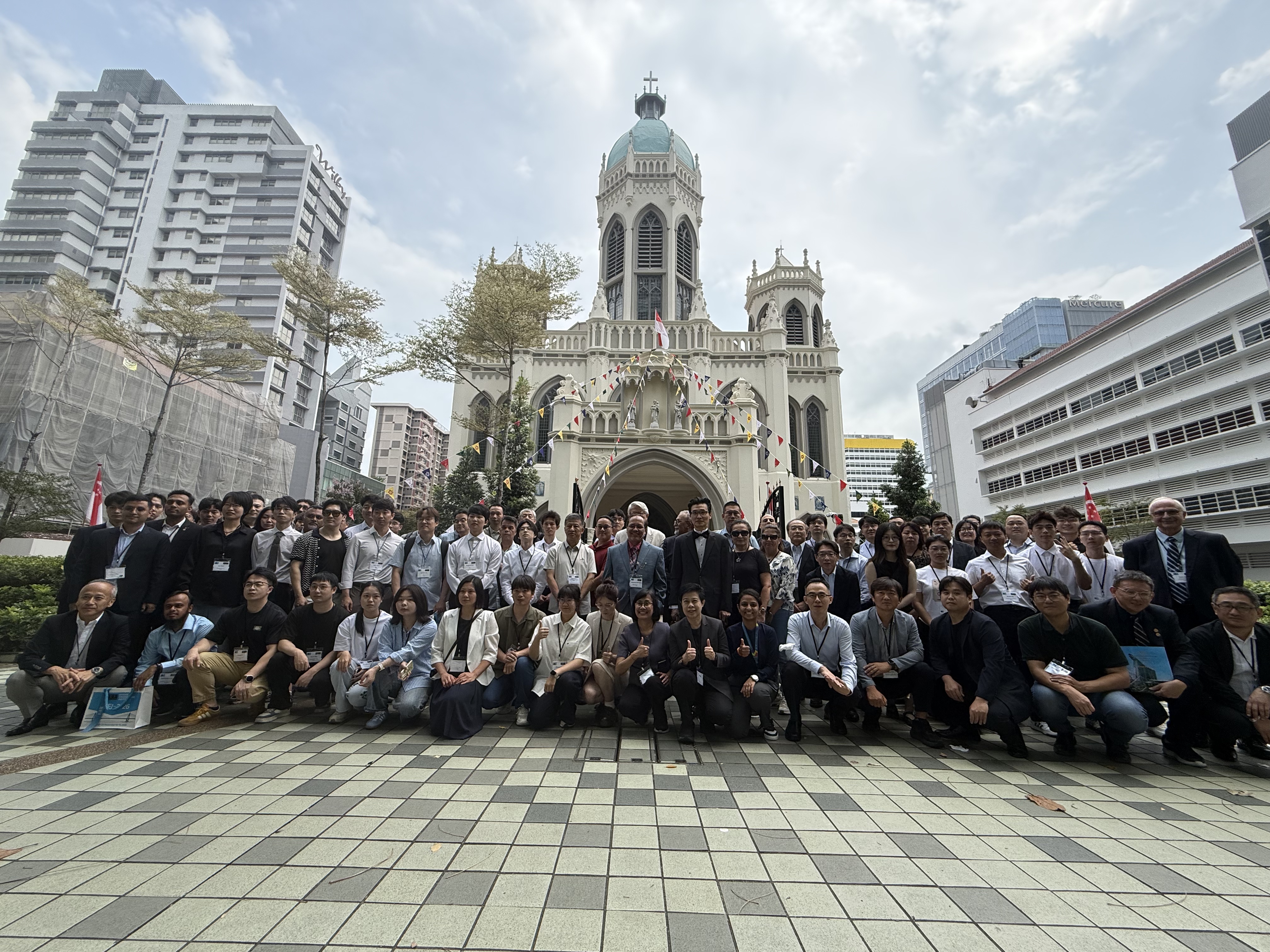

Civil engineering professor Yail Jimmy Kim leads an international conference exploring new materials, infrastructure resilience and the future of bridge engineering.
Every day, millions of people cross bridges without thinking about the engineering that keeps them safe. Behind those structures are decades of research, complex design decisions and an ongoing challenge: how to build infrastructure that lasts longer, performs better and remains reliable under growing demands.
As bridges age and transportation systems face increasing pressure, researchers worldwide are developing new materials, monitoring technologies and construction methods to improve the safety and longevity of critical infrastructure.
One of them is CU Denver professor Yail Jimmy Kim, a professor in the Department of Civil Engineering and Construction within CU Denver’s College of Engineering, Design and Computing (CEDC), who organized the 2026 Bridge Engineering Institute Conference (BEI-2026), held July 20-23 at the Hotel Grand Pacific Singapore.
As president of the Bridge Engineering Institute (BEI), an international technical society, Kim helps connect researchers, engineering professionals and students across borders to exchange knowledge and address shared infrastructure challenges.
Centered on the theme “Advances in Bridge Engineering,” the conference brought together international experts to explore emerging technologies, share research findings and discuss practical solutions for designing, constructing, maintaining and rehabilitating bridges.
Advancing the Science Behind Safer, Stronger Bridges
The challenges facing modern infrastructure extend far beyond building new bridges. Engineers must also determine how to extend the life of existing structures, improve their performance under extreme conditions and make maintenance more efficient and sustainable.
Across four plenary lectures and 16 technical sessions, BEI-2026 explored research addressing those challenges. Presentations covered advanced construction materials, structural modeling and analysis, bridge rehabilitation, earthquake and wind effects, structural health monitoring and life-cycle management. Several research areas focused on technologies that could change how engineers approach bridge construction and maintenance.
Ultra-high-performance concrete and fiber-reinforced polymer composites, for example, offer opportunities to improve structural strength, durability and rehabilitation methods. Advances in structural health monitoring are helping researchers better understand how infrastructure performs over time, while accelerated bridge construction methods aim to reduce construction timelines and transportation disruptions.
Together, these research directions point toward infrastructure that can be built more efficiently, monitored more effectively and maintained for longer periods.
For Kim, whose research spans bridge engineering, advanced composite materials, structural informatics and complex systems, these questions are central to understanding and improving the performance of modern infrastructure.
Connecting the Next Generation of Engineers to Global Research
The conference also created opportunities for engineering students to engage with the international research community.
Students attended alongside established researchers, professors and engineering practitioners from around the world, gaining exposure to emerging research and the professionals advancing the field.
That interaction is particularly valuable in a profession increasingly shaped by global collaboration. Materials developed in one country, monitoring techniques tested in another and research on structural performance can inform engineering practices across borders.
Conferences like BEI-2026 give emerging engineers opportunities to explore those connections, encounter new research approaches and develop a broader understanding of the challenges they may face throughout their careers.
At CU Denver, that connection between research and professional practice is central to the educational experience. Through faculty-led research, technical projects and professional engagement, students pursuing civil engineering gain exposure to the methods and ideas shaping modern infrastructure. Learning from faculty who are actively contributing to international research conversations provides another connection between academic preparation and the engineering profession.
From Denver to the Global Engineering Community
Kim’s leadership reflects the growing importance of international collaboration in addressing infrastructure challenges that no single institution or country can solve independently.
Whether engineers are studying structural deterioration, developing more durable construction materials or examining how bridges respond to environmental forces, advances in one part of the world can influence how infrastructure is designed and maintained elsewhere.
These questions carry particular relevance in Colorado, where transportation systems must accommodate changing travel demands, environmental conditions and the long-term maintenance of existing infrastructure.
By bringing researchers and practitioners together, the Bridge Engineering Institute helps create opportunities to exchange findings, evaluate new approaches and strengthen the professional relationships that support continued progress.
Kim’s role in organizing BEI-2026 also highlights the international reach of CU Denver’s engineering faculty. Through research and professional leadership, faculty members contribute to conversations that extend well beyond campus while connecting their academic expertise to challenges facing communities worldwide.
For students, that engagement offers a valuable perspective on what an engineering career can become: one shaped by technical expertise, international collaboration and the opportunity to improve systems people depend on every day.
Building Connections That Move Engineering Forward
As bridge infrastructure continues to age and engineering technologies advance, the need for collaboration between researchers, educators and industry professionals will only grow.
BEI-2026 brought those communities together around a shared objective: advancing the knowledge and technologies needed to make bridges safer, more durable, resilient and sustainable.
For CU Denver, Kim’s leadership demonstrates how faculty expertise contributes to the broader engineering profession while reinforcing the value of research-connected education.
The bridges that connect communities may be built locally, but the research shaping their future is increasingly global. From Denver to Singapore, CU Denver is helping advance that conversation — connecting engineering expertise, emerging research and the next generation of professionals who will design and maintain the infrastructure of tomorrow.
Explore civil engineering at CU Denver.
Discover how CU Denver’s College of Engineering, Design and Computing connects students with faculty research, structural engineering expertise and opportunities to address real-world infrastructure challenges.
Leave a Reply